

Best Coaching Equipment Bags for Football Gear Storage and Transport
Share
Quick Summary: The best football coaching equipment bag isn't necessarily the biggest or most expensive. It's the one that keeps your training essentials organised, protects your equipment and makes getting from the car to the pitch easier. For coaches carrying cones, bibs, footballs and smaller accessories, a spacious holdall with sturdy handles and separate compartments can be ideal. Larger teams may benefit from heavy-duty football kit bags, dedicated ball carriers or wheeled equipment bags. Prioritise practical capacity, durable materials, comfortable carrying options and easy access to your gear. Above all, choose a storage solution that suits your coaching sessions, team size and how frequently you travel.
Why Every Football Coach Needs a Reliable Equipment Bag
It's a familiar scene.
You've arrived at the training ground with fifteen minutes until kick-off. The players are gathering, the weather looks questionable, and you're searching through the boot of your car for the missing set of marker discs.
Your bibs are tangled around the agility ladder. The whistle has disappeared. And somehow, three footballs have rolled underneath the back seats.
Sound familiar?
Coaching football involves far more than planning drills and giving instructions. Behind every productive session is a collection of equipment that needs to be stored, transported, unpacked and packed away again.
That's where a reliable football coaching equipment bag earns its place.
A well-chosen bag helps you:
-
Stay organised: Keep training cones, bibs, whistles and other coaching accessories together.
-
Save valuable preparation time: Spend less time searching for equipment and more time setting up meaningful training activities.
-
Protect your investment: Reduce unnecessary wear and damage caused by loose equipment rolling around in vehicles or storage areas.
-
Transport equipment comfortably: Move your coaching essentials between home, the car, changing rooms and the pitch.
-
Maintain a professional setup: Arrive prepared, with everything you need for a structured session.
-
Simplify packing away: Make post-training equipment checks quicker and reduce the likelihood of leaving items behind.
For grassroots coaches, particularly those managing youth teams, these small improvements can make a considerable difference.
When you're responsible for organising drills, supervising players and managing limited training time, the last thing you need is an equipment storage problem.
And remember, your bag is only as useful as the equipment inside it. Having a properly organised selection of kids' football coaching equipment makes it easier to prepare engaging, age-appropriate sessions without carrying unnecessary gear.
Football Equipment Storage Is About More Than Convenience
Think about how often your coaching equipment gets moved.
From a garage to a car. From a car to a muddy training pitch. From the pitch back into storage, sometimes while everything is still damp.
Repeat that several times a week, throughout an entire football season.
Without suitable football equipment storage, even relatively simple accessories can become difficult to manage.
Training bibs get mixed together. Marker discs disappear. Small items settle at the bottom of oversized bags. Damp equipment gets forgotten until the next session.
A dedicated football training gear organiser helps establish a straightforward routine:
-
Before training: Check that the equipment needed for your planned drills is packed.
-
On arrival: Unpack items in the order you'll use them.
-
During training: Keep spare accessories together rather than scattering them around the touchline.
-
After training: Count equipment, separate anything wet or muddy and return everything to its designated place.
-
At home: Clean and dry equipment where necessary before storing it for the next session.
This approach is especially useful for volunteer coaches who balance football responsibilities with work, family life and other commitments.
The goal isn't to create a complicated equipment management system.
It's to make coaching simpler.
Best Types of Football Coaching Equipment Bags
Not all football equipment bags serve the same purpose.
Some are designed for carrying a handful of personal essentials. Others are intended to transport an entire team's training kit. Choosing between them depends on what you carry, how far you travel and how frequently you need access to your equipment.
Here are the main options worth considering.
1. Football Kit Holdalls: The Versatile All-Rounder
For many grassroots coaches, a traditional football kit holdall is an excellent starting point.
These bags typically feature a large central compartment, carrying handles and, depending on the design, additional pockets or an adjustable shoulder strap.
Their biggest advantage is versatility.
A suitably sized holdall can accommodate a useful mixture of football coaching accessories, including:
-
Training bibs and spare training tops
-
Marker cones and flat discs
-
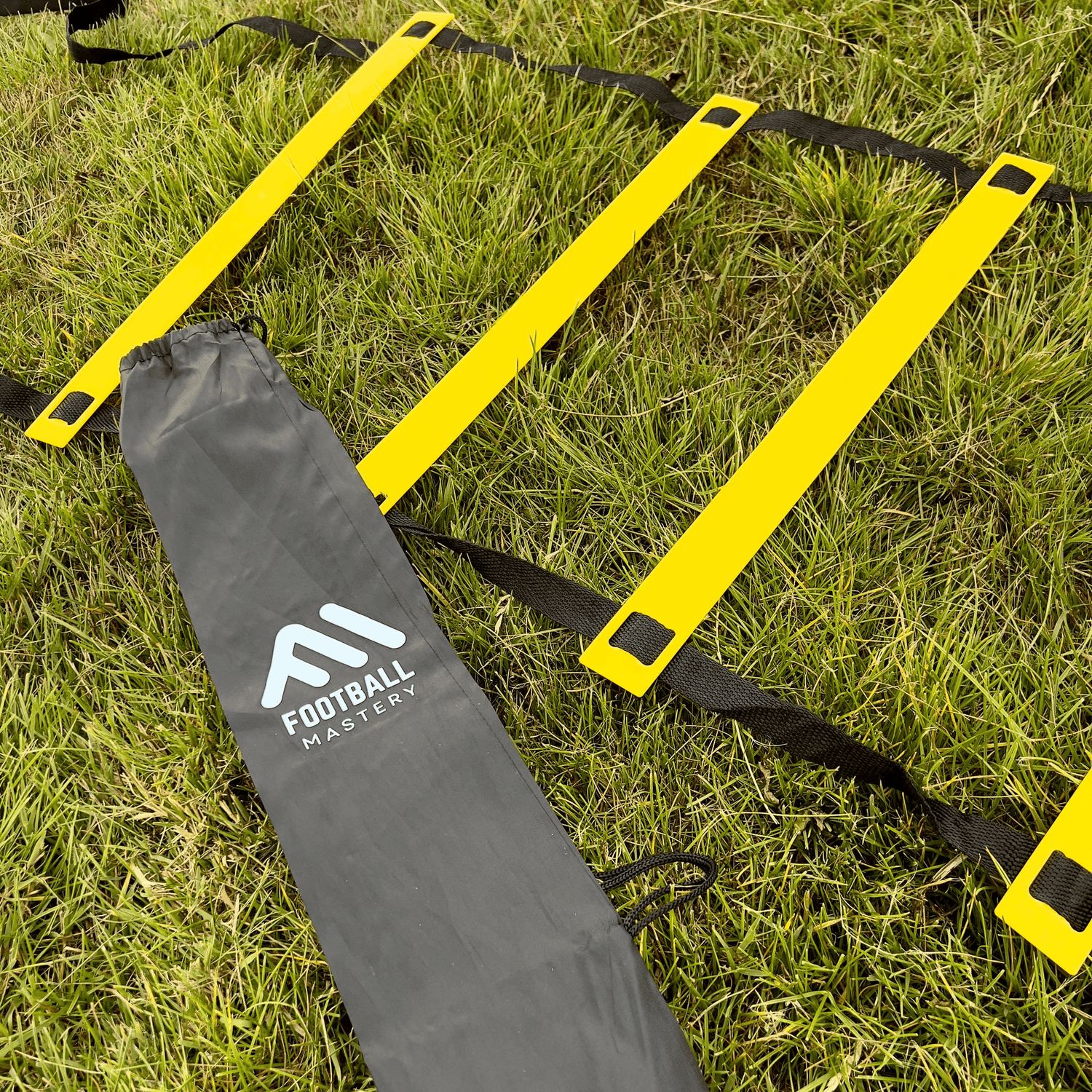
Agility ladders
-
Whistles and stopwatches
-
Small tactics boards
-
Ball pumps and spare needles
-
Water bottles and personal belongings
-
Basic first aid supplies
Rather than transporting several smaller bags, you can keep your everyday coaching essentials together.
Best suited to: Individual coaches, grassroots teams, school football sessions and coaches who carry a moderate amount of equipment.
What to look for: A wide opening, comfortable handles, robust zips and enough internal space to avoid crushing or bending equipment.
Potential drawback: A single large compartment can become cluttered unless you organise smaller items into separate pouches.
For coaches who want a simple, practical solution, football kit holdalls strike a useful balance between capacity and portability.
2. Large Football Team Kit Bags: Built for Bigger Sessions
As your coaching responsibilities grow, so does the amount of equipment you need.
A small-sided training session might require little more than a few footballs, cones and bibs.
But managing a full squad?
That's a different challenge.
Large football kit bags are designed to accommodate bulkier loads, making them particularly useful for coaches transporting shared team equipment.
Depending on the bag's dimensions, you may be able to carry larger quantities of training bibs, cones, agility equipment and other accessories.
These bags can also be useful for storing equipment between sessions, provided everything is clean and dry.
Best suited to: Football clubs, academy coaches, school teams and coaches managing multiple training groups.
What to look for:
-
Generous usable storage capacity
-
Strong handles and reinforced stitching
-
A durable base
-
Wide zip openings
-
Materials that are straightforward to wipe clean
-
A manageable weight when fully packed
One important consideration is the difference between bag capacity and practical carrying capacity.
A large bag might offer plenty of space, but filling it with heavy equipment can make it awkward to lift.
Always consider the total packed weight, not just the number of litres advertised.
3. Wheeled Football Equipment Bags: Ideal for Heavy Loads
If you've ever carried an overloaded kit bag across a large sports complex, you'll understand the appeal of wheels.
Football trolley bags and wheeled equipment holdalls are designed to reduce the amount of weight you need to carry.
Instead of lifting everything onto your shoulder, you can pull the bag using an integrated handle.
This can be particularly useful when transporting bulky coaching equipment between car parks, changing rooms and training facilities.
Best suited to: Club coaches, equipment managers, tournament organisers and anyone regularly transporting substantial amounts of football gear.
Useful features include:
-
Durable wheels suited to the intended surfaces
-
A comfortable pulling handle
-
A reinforced base
-
Stable construction when fully loaded
-
Secure zip closures
-
Additional lifting handles for steps and obstacles
However, wheeled bags aren't automatically the best option for every coach.
Grass pitches, gravel paths, muddy entrances and uneven ground can make pulling a trolley more difficult.
If most of your coaching takes place on outdoor community pitches, think carefully about the route between your vehicle and the training area.
A wheeled football coaching bag may be excellent on smooth surfaces but less convenient when you're crossing wet grass.
4. Football Ball Bags: Dedicated Storage for Training Balls
Footballs are among the bulkiest items in a coach's equipment collection.
Even a relatively small group session can require several balls, particularly when running passing practices, finishing drills or activities involving multiple stations.
Trying to squeeze them into a general-purpose kit holdall often leaves little room for anything else.
Dedicated football ball bags solve this problem by keeping training balls together in one place.
Mesh-style ball carriers are particularly useful when ventilation and visibility are priorities, although their suitability depends on the material and construction.
Best suited to: Coaches running ball-intensive sessions, football academies, schools and clubs managing shared footballs.
What to consider:
-
The number and size of footballs the bag can hold
-
Whether the opening allows quick loading and unloading
-
Handle or shoulder-strap comfort
-
Material strength
-
Ventilation and drainage
-
Ease of cleaning after wet sessions
For coaches carrying numerous footballs alongside other training accessories, using a dedicated ball carrier and a separate coaching holdall can be more practical than relying on one oversized bag.
5. Compact Coaching Bags: Keep Your Essentials Within Reach
Sometimes, bigger isn't better.
A compact football coach kit bag can be extremely useful for storing the smaller items you need during training.
Think whistles, pens, notebooks, stopwatches, spare pump needles and other accessories that have an irritating habit of disappearing into larger compartments.
A smaller organiser can sit inside your main equipment bag or be carried separately.
Best suited to: Coaches who want quick access to personal coaching essentials without searching through bulkier equipment.
What to look for: Secure pockets, straightforward access, lightweight construction and enough space for the accessories you genuinely use.
The combination of a larger equipment bag and a compact organiser is often more manageable than one enormous holdall containing everything.
How to Choose the Right Football Equipment Bag for Your Coaching Needs
Before buying a football training equipment bag, ask yourself one simple question:
What do I actually need to carry to every session?
It's tempting to choose the largest bag available, particularly when you're planning for future equipment purchases.
But oversized bags can encourage unnecessary packing, become uncomfortable to transport and make smaller accessories harder to find.
A better approach is to match your bag to your coaching routine.
Start With Your Essential Training Equipment
Lay out everything you regularly take to the pitch.
Separate your equipment into three groups:
| Equipment category | Typical items | Storage considerations |
|---|---|---|
| Everyday essentials | Whistle, stopwatch, notebook, tactics board | Small pockets or organiser pouch |
| Training accessories | Marker discs, cones, bibs, agility ladder | Spacious main compartment |
| Bulky equipment | Footballs, hurdles, larger training aids | Dedicated ball bag or larger carrier |
This simple exercise can reveal whether you genuinely need a large football equipment bag or whether a medium-sized holdall would be sufficient.
It also helps identify equipment that doesn't need to travel with you every week.
For example, if you regularly alternate between technical drills, agility exercises and small-sided games, your equipment requirements may change from session to session.
Instead of carrying everything all the time, consider preparing smaller groups of accessories for particular activities.
Coaches building a more complete training setup can also explore Football Mastery coaching equipment bundles to consider how complementary training accessories might fit into their equipment organisation routine.
Match Your Bag to Your Team Size
A coach working with six young players will usually have different storage requirements from someone managing a squad of twenty.
However, player numbers alone don't determine how much equipment you need.
Your training style matters too.
A session built around one technical practice might require relatively little equipment, while a circuit involving several activity stations could involve multiple sets of cones, bibs and agility accessories.
As a general guide:
| Coaching situation | Suggested bag type | Main consideration |
|---|---|---|
| Individual or small-group coaching | Compact or medium holdall | Easy access and portability |
| Grassroots youth team | Medium or large kit bag | Space for varied training accessories |
| Full-squad training | Large holdall with separate ball carrier | Organised bulk storage |
| Multiple teams or coaching groups | Large equipment bag or trolley | Capacity and transport convenience |
| Regular tournaments and away fixtures | Durable holdall or wheeled bag | Frequent packing and travelling |
These are practical starting points rather than fixed rules. The right size ultimately depends on your actual equipment inventory.
A good football equipment transport bag should comfortably accommodate your regular essentials while leaving enough room to pack and retrieve them without forcing everything inside.
The best bag is the one that makes your coaching day easier, not the one that holds the most equipment.
Key Features to Look for in Football Coaching Equipment Bags
Two football kit bags might look almost identical at first glance.
Same colour. Similar dimensions. Both described as spacious and durable.
But after a few months of travelling between training grounds, carrying damp equipment and being placed on muddy touchlines, the differences can become obvious.
A dependable football coaching equipment bag needs more than generous storage space. It should withstand regular use, remain comfortable to carry and make your equipment easy to access.
Here's what really matters when choosing one.
1. Durable Materials That Can Handle Regular Training
Football coaching equipment bags rarely enjoy an easy life.
They're lifted into car boots, dragged across changing-room floors, placed beside muddy pitches and occasionally left outside during unexpected downpours.
That's why material quality deserves serious consideration.
Common materials used in sports equipment bags include:
-
Polyester: Often lightweight, relatively affordable and suitable for regular use, depending on fabric thickness and construction.
-
Oxford fabric: A woven material commonly used in sports bags, with durability depending on the fibre, weave and coating.
-
Nylon: Frequently chosen for its strength-to-weight characteristics and resistance to everyday abrasion.
-
Mesh fabric: Useful for ventilation and visibility, particularly in football ball bags and equipment carriers.
-
Coated synthetic fabrics: Can provide additional protection against moisture and dirt, depending on the coating and seam construction.
Don't assume that a bag described as heavy-duty will automatically last longer than every alternative.
Pay attention to the details.
Are the handles securely attached? Does the base look reinforced? Are the seams neatly stitched? Do the zips move smoothly without catching?
These practical features often tell you more about a bag's suitability than marketing terminology alone.
Coaching tip: If your equipment bag regularly sits on damp grass or rough surfaces, prioritise a durable, easy-clean base. It's one of the areas most likely to experience repeated wear.
2. Water Resistance and Protection From the Elements
British football doesn't stop just because the weather turns miserable.
One minute you're coaching under blue skies. The next, you're gathering cones in sideways rain while your players sprint towards the changing rooms.
Your equipment bag needs to cope with those conditions.
However, there's an important distinction between water-resistant and waterproof football kit bags.
Water-resistant bags are designed to resist some moisture exposure, such as light rain or splashes. Their level of protection varies according to the fabric, coatings, zips and seams.
Waterproof bags should provide a higher level of protection, but the term should only be trusted when supported by suitable construction details or testing.
For most grassroots coaches, a well-constructed water-resistant bag may provide sufficient protection during routine journeys between the car and the pitch.
If you regularly leave equipment exposed outdoors, stronger weather protection becomes more important.
Consider whether the bag offers:
-
Coated or moisture-resistant outer fabric
-
A base that limits moisture transfer from wet ground
-
Secure zip closures
-
Easy-clean surfaces
-
Suitable protection for notebooks, electronics and other moisture-sensitive items
Remember that keeping rain out is only half the challenge.
Wet equipment can also introduce moisture into the bag.
Always remove damp bibs, socks and other fabric items after training rather than leaving them sealed inside overnight.
3. Storage Compartments That Make Organisation Easier
Picture opening your equipment bag and immediately finding exactly what you need.
No rummaging.
No tangled bibs.
No emptying half the contents onto the touchline just to locate a whistle.
That's the advantage of thoughtful compartment design.
A multi-compartment football bag can make equipment management significantly easier, particularly when you're carrying a mixture of bulky and small accessories.
Useful storage features include:
Large main compartment
Ideal for training cones, marker discs, bibs and other regularly used accessories.
Separate zipped pockets
Useful for whistles, pens, notebooks, spare pump needles and small personal belongings.
Internal dividers
Can help separate equipment categories and prevent smaller items from becoming buried beneath larger accessories.
External pockets
Provide quick access to frequently used items without opening the main storage area.
Dedicated boot compartment
Can help separate dirty football boots from cleaner clothing or accessories, provided the compartment is appropriately designed.
Ventilated sections
May help improve airflow around damp equipment, although wet items should still be removed and dried after use.
Not every coach needs all these features.
In fact, an uncomplicated holdall with one spacious compartment and a couple of secure pockets may be perfectly adequate.
The trick is choosing a layout that matches how you work.
A well-organised football equipment bag doesn't just store your gear. It helps you establish a repeatable routine before, during and after every coaching session.
4. Comfortable Handles and Carrying Straps
A bag can have excellent storage capacity and still be frustrating to use.
Especially when it's fully loaded.
If you regularly walk from a distant car park to the training pitch, carrying comfort becomes a genuine priority.
Look for features such as:
-
Padded shoulder straps
-
Adjustable carrying straps
-
Reinforced grab handles
-
Comfortable handle grips
-
Balanced weight distribution
-
Secure strap attachment points
A football bag with a padded shoulder strap can be convenient when you need your hands free for carrying footballs or opening gates.
However, even a comfortable strap won't compensate for an excessively heavy load.
If your equipment is consistently difficult to carry, consider splitting it between two bags or choosing a wheeled football equipment carrier where the terrain allows.
5. Strong Zips, Reinforced Seams and a Reliable Base
Some of the most important bag features are also the easiest to overlook.
A broken zip can make an otherwise perfectly usable equipment bag frustrating to transport.
Weak stitching around handles can become a problem when a bag is repeatedly lifted while heavily loaded.
And a poorly constructed base may wear quickly when placed on rough surfaces.
When evaluating football equipment storage bags, pay particular attention to these areas.
| Feature | Why it matters | What to check |
|---|---|---|
| Zips | Keep equipment secure during transport | Smooth operation and robust construction |
| Handle stitching | Supports repeated lifting | Secure attachment and reinforced seams |
| Bag base | Experiences frequent ground contact | Abrasion resistance and suitable reinforcement |
| Shoulder strap | Affects carrying comfort | Adjustment, padding and attachment strength |
| Internal lining | Helps protect contents and simplifies cleaning | Durable, accessible surfaces |
| Wheels, where fitted | Support movement of heavier loads | Stability, wheel construction and terrain suitability |
These details become increasingly important when a bag is used several times a week.
What Size Football Kit Bag Do Coaches Actually Need?
Choosing the right capacity is one of the most common challenges when buying football training equipment bags.
Too small, and you'll struggle to fit your essentials inside.
Too large, and you'll find yourself carrying an awkward, half-empty holdall that takes up unnecessary space.
The answer depends on what you're transporting.
Understanding Football Equipment Bag Capacity
Bag capacity is often measured in litres.
This gives you an indication of the internal volume available, although the actual usable space also depends on the bag's shape, compartment layout and opening.
For example, a long agility ladder might fit comfortably into one rectangular holdall but prove awkward to pack into a shorter bag with a similar advertised capacity.
Likewise, several footballs can consume a considerable amount of space even when the overall weight remains manageable.
The following size ranges provide a useful starting point.
| Bag capacity | Typical coaching use | Suitable equipment |
|---|---|---|
| Under 30 litres | Personal coaching essentials | Whistle, notebook, small accessories, spare clothing |
| 30–50 litres | Light training sessions | Bibs, marker discs, compact training accessories |
| 50–80 litres | General grassroots coaching | Cones, bibs, agility equipment and additional accessories |
| 80–100 litres | Larger coaching setups | Bulk training equipment and team accessories |
| Over 100 litres | Club and multi-team equipment | Larger quantities of kit and bulky accessories |
These are approximate capacity guidelines, not guaranteed equipment quantities. Always check the manufacturer's internal dimensions and recommended load limits.
Why Bag Shape Matters as Much as Capacity
Imagine two football equipment bags, both advertised at 80 litres.
One is long and rectangular.
The other is shorter, taller and more compact.
Although their total volume is similar, they may accommodate different equipment.
Longer bags can be useful for certain folded agility ladders and training accessories.
Taller bags may be better suited to loosely packed clothing, bibs and other flexible items.
Meanwhile, a wide opening can make bulky equipment easier to load than a narrow zip opening.
Before purchasing, measure your longest regularly carried accessory and compare it with the bag's internal dimensions.
This is particularly important if you transport equipment such as:
-
Folded agility ladders
-
Training hurdles
-
Coaching boards
-
Bundles of marker cones
-
Portable training accessories
-
Larger quantities of footballs
For long training poles or oversized equipment, a dedicated carrier may be necessary regardless of the main bag's capacity.
Should You Buy One Large Bag or Several Smaller Bags?
There's no universal answer.
A single large football kit bag can be convenient because everything stays together.
But several smaller bags can offer better organisation, particularly when you carry different equipment for different sessions.
One large bag works well when:
-
You use a similar equipment setup every week.
-
Most accessories can be carried comfortably together.
-
You want to minimise the number of items you transport.
-
Your bag has enough compartments to keep essentials organised.
Multiple bags may work better when:
-
You coach several age groups.
-
Your training equipment changes between sessions.
-
You transport a large number of footballs.
-
You need to separate clean kit from muddy equipment.
-
Different coaches share responsibility for particular accessories.
For many grassroots teams, a combination of one main coaching holdall and a dedicated football ball bag offers a practical compromise.
Wheeled Football Bags vs Shoulder-Carried Holdalls: Which Is Better?
It's one of the most useful comparisons to make before investing in a new football equipment transport bag.
Should you choose a traditional holdall or a wheeled trolley?
Both have advantages.
And both have limitations.
The best choice depends less on appearance and more on your regular coaching environment.
Shoulder-Carried Football Holdalls
Traditional holdalls remain popular because they're relatively straightforward to use.
You can lift them into the boot of your car, carry them up steps and move them across uneven surfaces without worrying about wheels getting stuck.
They also tend to be easier to store in smaller spaces.
Advantages:
-
Convenient for short journeys
-
Suitable for uneven ground
-
Usually easier to lift over obstacles
-
Often lighter than equivalent wheeled designs
-
Straightforward to store between sessions
Potential disadvantages:
-
Heavy loads can become uncomfortable
-
Weight is carried by the user
-
Large bags can be awkward over longer distances
-
Overpacking may place additional strain on handles and straps
For coaches travelling with a moderate amount of training equipment, a well-designed holdall is often the simplest solution.
Wheeled Football Trolley Bags
Wheeled football kit bags become particularly attractive when equipment loads increase.
Rather than carrying everything, you can roll the bag across suitable surfaces.
This can reduce the effort involved in moving bulky coaching accessories around sports facilities.
Advantages:
-
Convenient for heavier equipment loads
-
Useful across smooth car parks and paved pathways
-
Can reduce the need to carry weight over longer distances
-
Often available with substantial storage capacity
-
Practical for tournament and club equipment transport
Potential disadvantages:
-
Wheels may struggle on muddy grass or gravel
-
Trolley mechanisms add weight
-
Some designs take up more storage space
-
Stairs and uneven surfaces still require lifting
-
Wheels and handles introduce additional components that may need maintenance
Quick Comparison: Football Holdall vs Trolley Bag
| Consideration | Shoulder-carried holdall | Wheeled trolley bag |
|---|---|---|
| Short journeys | Excellent | Good |
| Heavy equipment loads | Less convenient | Often preferable |
| Muddy grass pitches | Generally practical | Can be difficult |
| Smooth pathways | Good | Excellent |
| Stairs and obstacles | Easier to manoeuvre | May require lifting |
| Compact storage | Often easier | Depends on design |
| Transporting bulky team kit | Depends on capacity | Often convenient |
| Maintenance requirements | Usually minimal | Wheels and handles need checking |
The Best Choice for Grassroots Football Coaches
If you mainly coach at local parks, school playing fields and community pitches, a durable shoulder-carried holdall may be more versatile.
You'll often encounter uneven paths, wet grass and areas where wheels offer little advantage.
On the other hand, if you regularly transport large quantities of equipment through sports centres, stadium facilities or paved training complexes, a wheeled football trolley bag could make life considerably easier.
There's also a third option.
Some coaches prefer using a lightweight main bag for smaller accessories while transporting footballs and other bulky items separately.
This approach distributes the load and allows equipment to be unpacked more efficiently.
The deciding factor should always be your typical journey from vehicle to pitch, combined with the weight and size of your coaching equipment.
Best Football Equipment Bags for Grassroots Coaches and Youth Teams
Grassroots football is the heartbeat of the game.
Early morning training sessions. Rain-soaked Sunday fixtures. Parents volunteering their time. Young players arriving with boundless energy, ready to learn something new.
Behind it all, there's usually a coach juggling far more than tactics and team selection.
Equipment management might not be the most glamorous part of football coaching, but getting it right can make every session run more smoothly.
For grassroots coaches, the ideal football equipment bag should be practical, affordable and easy to manage.
You don't necessarily need an enormous professional-style kit trolley. You need something that works for your players, your equipment and your training environment.
Choosing a Bag for Children's Football Coaching
Coaching younger players often involves a wide variety of training accessories.
Marker discs for creating playing areas. Coloured bibs for small-sided games. Cones for dribbling challenges. Agility equipment for movement and coordination activities.
The equipment itself may be relatively lightweight, but it quickly adds up.
For coaches working with younger age groups, a medium-sized football kit holdall can be a sensible choice.
Look for a bag that offers:
-
Enough room for your regular training accessories
-
A wide opening for quick access
-
Comfortable handles for carrying between pitches
-
Secure pockets for whistles and smaller items
-
Materials that are easy to clean after muddy sessions
-
A manageable size that doesn't encourage unnecessary packing
It's also worth thinking about how you organise your sessions.
If you frequently run several activities simultaneously, keeping different equipment groups together can save time.
For example, you might prepare one pouch containing marker discs for dribbling practices and another holding bibs for small-sided matches.
When it's time to change activities, you can retrieve what you need without unpacking the entire bag.
Affordable Football Coaching Bags: What Should You Prioritise?
Not every grassroots coach has a substantial equipment budget.
Many purchase accessories themselves or work with clubs where every pound matters.
Fortunately, choosing a useful football training equipment bag doesn't require selecting the most expensive option.
Instead, focus on the features that provide genuine everyday value.
Prioritise these essentials:
-
Appropriate capacity: Enough room for your regular equipment without unnecessary bulk.
-
Reliable construction: Strong seams, practical handles and dependable zip closures.
-
Comfortable transportation: A carrying system suited to your typical journey.
-
Easy access: An opening that makes packing and unpacking straightforward.
-
Simple maintenance: Materials that can be cleaned after exposure to mud and moisture.
Additional pockets, premium finishes and trolley mechanisms may be useful, but they're not essential for every coach.
A straightforward, durable holdall that suits your equipment is often a better investment than an oversized bag filled with features you'll rarely use.
Why Organisation Matters When Coaching Young Players
Young footballers don't always have unlimited patience.
If an activity finishes and the next one takes several minutes to set up, attention can quickly drift.
Players start kicking spare balls around. Conversations develop. The momentum of your session disappears.
Having your equipment organised helps reduce those interruptions.
Imagine running a session involving three activities:
-
Dribbling practice: Marker cones and footballs
-
Passing combinations: Flat discs and small target areas
-
Small-sided matches: Coloured bibs and pitch markers
If the necessary accessories are already grouped together, transitions become much easier.
This doesn't mean every session needs to be rushed.
It means less time searching for equipment and more time creating meaningful opportunities for players to practise.
Best Football Equipment Storage Solutions for Clubs and Larger Teams
Individual coaches aren't the only people who benefit from organised equipment storage.
Football clubs often manage considerably larger collections of training gear.
Multiple teams may share footballs, cones, bibs, hurdles, portable goals and other coaching accessories.
Without a clear storage system, equipment can become mixed up, misplaced or damaged.
A combination of large football team kit bags, dedicated ball carriers and clearly labelled storage containers can make club equipment management more straightforward.
Use Dedicated Bags for Different Equipment Categories
Rather than placing everything into one enormous football team bag, consider separating accessories according to their purpose.
For example:
| Equipment category | Suggested storage solution | Main benefit |
|---|---|---|
| Footballs | Dedicated football ball bag | Keeps balls together for transport and counting |
| Training bibs | Lightweight kit bag or mesh carrier | Separates clothing from harder accessories |
| Marker cones and discs | Compact equipment bag | Makes pitch setup quicker |
| Agility equipment | Suitable holdall or dedicated carrier | Keeps training accessories grouped |
| Coaching essentials | Small organiser pouch | Provides quick access to whistles, pens and notes |
| Shared club equipment | Large team kit bag or trolley | Simplifies bulk transportation |
This approach is particularly helpful when several coaches use the same equipment.
Instead of searching through one large storage area, each coach can identify the accessories required for their session.
Create a Simple Football Equipment Management System
You don't need complicated software or expensive storage cabinets to manage coaching equipment effectively.
A basic routine can make a significant difference.
Step 1: Create an equipment inventory
Record the number of footballs, bibs, cones and other accessories owned by the club.
Step 2: Assign equipment to specific bags
Keep related items together wherever practical.
Step 3: Label each bag
Use clear descriptions such as "Training Bibs", "Marker Cones" or "Under-10s Equipment".
Step 4: Establish a sign-out routine
If multiple coaches share equipment, record who has taken each bag and when it should be returned.
Step 5: Check equipment regularly
Inspect items for damage, missing components and excessive wear.
Step 6: Store everything correctly
Allow wet equipment to dry before returning it to long-term storage.
For larger grassroots clubs, this simple system can reduce unnecessary replacement purchases and make shared resources easier to manage.
How to Organise Football Coaching Equipment Like a Pro
A great equipment bag is only part of the solution.
How you pack it matters just as much.
Even the most spacious football gear storage bag can become frustrating when everything is thrown inside without a plan.
The aim is to create a system that's easy to maintain, even after a tiring evening session in the rain.
Pack According to How Frequently You Use Each Item
Think about the order in which you normally set up training.
You might begin by marking out the playing area, followed by organising footballs and preparing bibs for later activities.
Your bag should reflect that routine.
Place frequently used items where they're easiest to reach.
Keep smaller accessories in secure pockets.
Store bulkier equipment in the main compartment, ensuring heavier items don't crush more delicate accessories.
A practical packing arrangement might look like this:
-
Top of the bag: Marker discs, whistle and frequently used accessories
-
Main compartment: Bibs, folded agility equipment and training cones
-
Side pockets: Stopwatch, pens, spare pump needles and small essentials
-
Separate carrier: Footballs or particularly bulky equipment
-
Protective pouch: Notebook, tactics sheets and moisture-sensitive items
The exact arrangement will depend on your bag's design, but the principle remains the same.
Everything should have a place.
Separate Wet and Dirty Equipment
Few things are more unpleasant than opening a football kit bag to discover damp bibs that have been sitting inside for several days.
Moisture can encourage unpleasant odours and create conditions in which mould develops.
Mud and dirt can also transfer onto cleaner equipment.
After wet sessions:
-
Remove damp bibs and clothing as soon as possible.
-
Wipe mud from cones, marker discs and other hard accessories.
-
Allow footballs and equipment to dry appropriately.
-
Open the bag to improve airflow.
-
Clean the bag according to its care instructions.
-
Repack equipment only when sufficiently dry.
A separate laundry or wet-kit bag can help prevent dirty clothing from coming into contact with other accessories during the journey home.
However, it shouldn't become a permanent storage solution for damp equipment.
Use a Pre-Training Equipment Checklist
One of the easiest ways to avoid forgotten accessories is to create a simple checklist.
It doesn't need to be complicated.
In fact, the shorter and more practical it is, the more likely you'll use it.
Example football coaching equipment checklist:
-
Footballs checked and inflated appropriately
-
Training cones and marker discs packed
-
Bibs organised by colour
-
Agility equipment packed if required
-
Whistle and stopwatch included
-
Tactics board or session notes ready
-
Ball pump and necessary accessories packed
-
First aid supplies checked
-
Water and personal essentials prepared
-
Equipment bags securely closed
You can adapt this list to suit your coaching sessions.
A coach running technical development activities may need different equipment from someone organising a full-squad tactical practice.
The important thing is consistency.
Good preparation doesn't guarantee a perfect training session, but it gives you more time and attention to focus on the players rather than the equipment.
How to Maintain Your Football Equipment Bag
Football equipment bags are exposed to plenty of wear throughout a season.
Mud, rain, grass, changing-room floors and repeated journeys can all affect their condition.
A little regular maintenance can help keep your bag usable for longer.
Clean Your Bag After Muddy Sessions
Avoid allowing thick mud to dry repeatedly on the fabric.
Where the manufacturer's instructions permit, use a soft cloth or brush to remove loose dirt before wiping the affected areas with mild soapy water.
Avoid harsh cleaning chemicals unless they're specifically recommended for the material.
For bags with removable inserts or base panels, check whether these components can be cleaned separately.
Check Handles, Straps and Zips
Inspect the areas that experience the most strain.
Look for:
-
Loose stitching around carrying handles
-
Fraying shoulder straps
-
Damaged zip teeth
-
Cracked or worn base panels
-
Loose trolley handles
-
Wheels that no longer rotate smoothly
Addressing minor problems early may prevent more significant damage later.
If a handle or strap appears unsafe, avoid carrying heavy equipment until the issue has been resolved.
Avoid Overloading Your Bag
A spacious football equipment bag isn't an invitation to fill every available centimetre with heavy accessories.
Overloading can place unnecessary strain on zips, seams and carrying handles.
It can also make the bag uncomfortable or unsafe to lift.
Follow any stated load limits and distribute equipment sensibly.
If your regular coaching setup becomes too heavy, split the load between multiple carriers or consider a suitable wheeled alternative.
Store Your Bag Somewhere Dry
Once equipment has been cleaned and dried, keep the bag in a dry, ventilated location.
Avoid leaving damp kit sealed inside or storing the bag directly against persistently wet surfaces.
Proper storage is particularly important during periods when football equipment isn't being used regularly.
Football Coaching Equipment Bag Buying Checklist
Before deciding which football equipment storage solution to buy, use this checklist to compare your options.
| Buying consideration | Questions to ask |
|---|---|
| Capacity | Will it comfortably hold my regular coaching equipment? |
| Dimensions | Can it accommodate my longest or bulkiest accessories? |
| Materials | Is the fabric suitable for frequent outdoor use? |
| Durability | Are the handles, seams, base and zips well constructed? |
| Weather protection | Does it offer the moisture resistance I need? |
| Compartments | Can I separate smaller essentials from bulkier equipment? |
| Carrying comfort | Will it be manageable when fully packed? |
| Portability | Is a holdall or wheeled bag better for my training venue? |
| Maintenance | Can the bag be cleaned and dried easily? |
| Storage | Will it fit conveniently in my car and storage area? |
| Value | Am I paying for features I'll genuinely use? |
The most suitable football coaching bag should meet your practical needs without creating unnecessary expense, weight or complexity.
Frequently Asked Questions About Football Coaching Equipment Bags
What is the best type of bag for a football coach?
For many grassroots coaches, a medium or large football kit holdall offers a useful combination of storage capacity, portability and convenience.
If you regularly transport numerous footballs, a separate ball bag may be worthwhile.
Coaches carrying particularly heavy equipment may prefer a wheeled trolley bag, provided their training venue has suitable pathways.
What size football kit bag do I need for coaching?
A bag of approximately 50–80 litres may be a useful starting point for coaches carrying cones, bibs and compact training accessories.
However, the ideal capacity depends on your equipment and the bag's internal dimensions.
Coaches managing larger squads or bulky accessories may require additional storage.
Are wheeled football equipment bags better than holdalls?
Not necessarily.
Wheeled bags can be convenient for transporting heavy equipment across smooth surfaces, while traditional holdalls are often easier to manoeuvre across grass, steps and uneven terrain.
Choose according to your equipment weight and typical journey to the pitch.
Can I store footballs and training equipment in the same bag?
Yes, provided the bag is large enough and the contents can be transported safely.
However, footballs take up considerable space.
Using a dedicated football ball bag alongside a separate coaching equipment holdall can make packing and organisation easier.
Are waterproof football kit bags necessary?
Not every coach needs a fully waterproof bag.
For routine journeys between the car and training pitch, a suitably water-resistant design may be sufficient.
If your equipment is frequently exposed to heavy rain, stronger weather protection may be beneficial.
Always check the manufacturer's actual specifications rather than relying on product descriptions alone.
How do I stop my football equipment bag from smelling?
Remove wet bibs and clothing promptly, clean muddy equipment and allow the bag to dry thoroughly after use.
Regular cleaning, suitable ventilation and avoiding prolonged storage of damp items can help reduce unpleasant odours.
What should every football coach keep in their equipment bag?
Common essentials include training cones, marker discs, bibs, a whistle, stopwatch, session notes, ball pump and appropriate first aid supplies.
The exact contents should reflect the age group, number of players and activities being coached.
How can I organise football training equipment for multiple teams?
Use clearly labelled bags for different equipment categories, maintain a basic inventory and establish a consistent packing and return routine.
For clubs with several coaches, a simple sign-out system can also help prevent shared accessories from going missing.
Final Thoughts: Choose a Football Equipment Bag That Works as Hard as You Do
There's something satisfying about arriving at the training ground knowing you're prepared.
The footballs are ready.
The cones are organised.
The bibs are easy to find.
And instead of spending the opening minutes searching through a chaotic pile of equipment, you can concentrate on what really matters: coaching your players.
That's the real value of a dependable football coaching equipment bag.
It isn't simply somewhere to store your kit.
It's part of a more organised, efficient and enjoyable coaching routine.
For individual grassroots coaches, a durable holdall with practical storage space may be all that's needed.
For larger clubs, dedicated ball carriers, spacious football team kit bags and wheeled equipment solutions can make managing shared resources considerably easier.
Whatever option you choose, prioritise the fundamentals: appropriate capacity, durable construction, comfortable transportation and straightforward organisation.
And don't forget that the quality of your training setup goes beyond the bag itself.
Well-chosen coaching accessories, thoughtful session planning and a consistent equipment management routine all contribute to smoother training sessions.
At Football Mastery, we believe effective coaching starts with giving players meaningful opportunities to learn, practise and enjoy football.
Keeping your equipment organised is one small but valuable step towards making that happen.
Choose equipment that supports your coaching, keep it organised and spend more time doing what you love: developing footballers.