

Football Rebound Boards Perfect for Schools and Clubs
Share
Looking to elevate football training in schools and clubs? Discover how rebound boards are revolutionising skill development for all ages and abilities. In this article, we explore how the right football rebounder can improve passing accuracy, ball control and decision-making. We also break down key design features such as adjustable angles, portability, and interactivity — plus guidance on choosing the ideal option for team or individual use. Whether you're outfitting a grassroots club or expanding your school's PE equipment, you’ll learn how a modern rebound training board can transform every session into a game-changing experience.
Why Rebound Boards Are Changing the Game
Rebound boards have swiftly become a cornerstone of modern football training equipment. They offer a practical, dynamic way to sharpen ball control, reflexes, and spatial awareness — all in one compact unit.
At Football Mastery, our rebound boards are designed with schools and clubs in mind. Whether it's a fast-paced team drill or one-on-one first-touch training, a quality football rebound board introduces consistency, versatility and fun into every session.
“The best training tools are those that let players make mistakes, learn quickly, and repeat with purpose — rebounders offer just that.”
Tailored for Schools & Clubs
From PE lessons to elite youth academies, schools and clubs need gear that delivers durability, function, and value. Our rebound board is a purpose-built solution for institutions that demand long-lasting performance in high-frequency settings.
Key benefits of integrating rebounders into your school or club training include:
- Beginner to professional use: Suitable for players of all levels, from grassroots to elite.
- Individual or team training: One-to-one drills or small group rotations.
- Portable bounce back board: Quick setup on grass, turf, or indoor surfaces.
- Compact size: Ideal for schools where space is limited.
- Durable HDPE rebound surface: Engineered for consistent bounce and weatherproof resilience.
Clubs love rebounders because they offer a reliable way to build technical skills under pressure. Schools love them because they engage students of all ages in purposeful movement, not just busywork.
Explore the full rebound board collection to see which model suits your environment.
Not Just a Wall — A Complete Training Tool
Gone are the days of players pinging balls against a gym wall and calling it practice. A modern football rebounder delivers far more:
- Predictable return for drills
- Randomised bounce for reflex training
- Dual‑angle design to simulate real-game scenarios
- Adjustable rebound angles for volleys, ground passes or lofted balls
- Foldaway legs for easy transport and storage
- Freestanding design — no installation required
These features make it easy to design a training session that targets specific player attributes. Whether you’re aiming to improve passing accuracy, enhance close control, or develop reaction speed, a rebound training board for football brings versatility to the pitch.
Real Training Impact: What Rebounders Actually Improve
A rebound board isn't just a passive wall to kick against — it's an active part of the coaching process. When integrated properly, rebounders can play a vital role in skill development for players across the age spectrum.
Here’s what a structured rebounder session can help improve:
- Passing drills: Short and long-range accuracy, timing, and weight of pass.
- First-touch training: Control under pressure using feet, thighs or chest.
- Shooting practice: Precision shots off the rebound or one-touch finishes.
- Reaction and reflex training: Responding to unpredictable returns.
- Agility & technique training: Combining footwork with ball control.
- Decision-making drills: Reading angles and responding with the right touch.
When coaches want players to develop game-intelligent habits, interactive tools like rebounders provide real-time learning loops. They encourage repetition with variation — an essential ingredient for effective training.
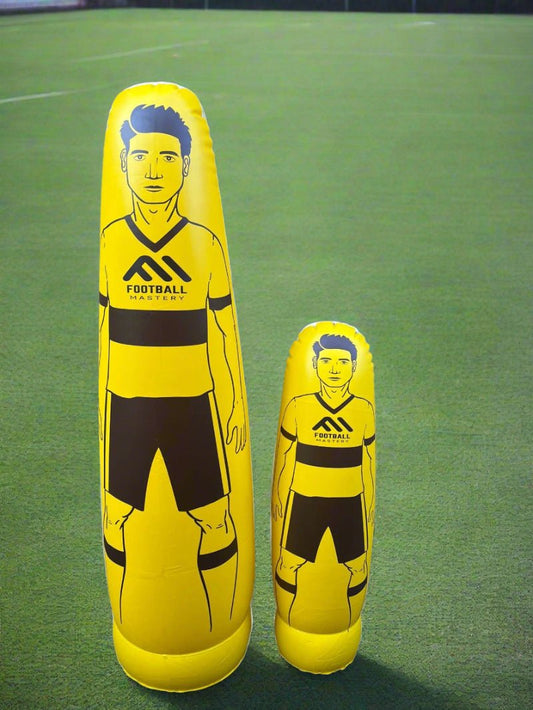
To further amplify reaction speed and cognitive focus, coaches can pair their rebound board with training aids like the Air Mannequins (x3). These simulate defenders and create match-realistic pressure in small spaces.
“Every rebound is a decision. Players must read the ball’s flight, choose the technique, and execute — in seconds.”
Choosing the Right Model: What to Look For
Not all rebounders are created equal. When selecting the ideal rebound wall or board for your school or club, it’s essential to match its features with your training goals and physical space.
Look for the following design characteristics:
- Adjustable angles: Allows a range of return trajectories.
- Impact-resistant build: Especially important for high-use environments.
- Powder-coated steel legs: Ensures stability on all surfaces.
- Weatherproof durability: Critical for year-round outdoor use.
- Lightweight & portable: So staff and students can move it with ease.
- Quick-release pins or foldable elements: For simple setup and storage.
Multi-skill rebound boards — like our 4-in-1 models — combine these traits into one streamlined package. They're ideal for clubs running tight weekly schedules and schools juggling multiple PE groups throughout the day.
To see more models built for a range of training styles, check out our football mastery bundles that group core rebound gear for convenient, cost-effective set-ups.
Bringing Training into the Future: Interactivity & Innovation
In the evolving landscape of football coaching, rebounders have moved far beyond static boards. The most forward-thinking schools and clubs are now integrating interactive rebound boards that combine physical challenge with digital feedback.
Some of the standout enhancements include:
- Reaction training lights: These trigger random cues, enhancing focus and timing.
- Real-time feedback: Players receive instant data on speed, accuracy or timing.
- Accuracy and field awareness tracking: Ideal for developing tactical intelligence.
- Interactive training modes: Features such as the METIS React App allow players to compete, monitor progress and refine technique.
This tech-enhanced approach introduces a layer of gamification to traditional drills. It’s particularly effective for engaging younger players who thrive in a digitally interactive environment, while also offering measurable development insights for coaches and PE departments.
Whether you’re preparing for the next school tournament or looking to enhance player performance week to week, combining rebound boards with interactive elements ensures every drill stays fresh and challenging.
Why Rebound Boards Make a Smart Long-Term Investment
There’s a reason clubs and schools across the UK are making room for rebound training aids in their equipment lists. It’s not just about improving technical skills — it’s about delivering consistent, high-impact training opportunities in a cost-effective format.
Here’s why rebounders stand out:
- Multi-functional: Support for multiple drills and skill levels.
- Durable design: Long-lasting in even the busiest school or club environments.
- All-weather usability: Keeps training on track, regardless of conditions.
- Inclusive: Suitable for youth football training, mixed-ability sessions, or advanced academies.
For educational institutions, they tick all the right boxes — encouraging participation, supporting PE curriculum goals, and keeping students engaged. For clubs, they’re an essential piece of football coaching gear that supports year-round development.
You can explore our full training range, including rebounder accessories and supporting tools, at our main store.
Final Thoughts
Football rebound boards are more than just a piece of training equipment — they’re an investment in player growth, engagement, and performance. Whether you're coaching a local club or running a school football programme, integrating a high-quality rebound trainer unlocks a new dimension of technical development.
From helping players improve passing accuracy and ball control, to fostering quicker reactions and smarter decisions, rebounders offer flexibility that suits every session and every level. With the right setup, your team or class won’t just train more — they’ll train better.
Frequently Asked Questions (FAQs)
Here are the top 10 questions schools and clubs often ask when considering football rebound boards. These cover practical, safety, and usage concerns not fully addressed in the main article.
1. What size rebound board is best for school use?
For schools, a medium-sized board (around 100–150cm wide) strikes the best balance between portability and functionality. It’s large enough to accommodate varied drills but compact enough for easy storage and transport between sessions.
2. Are rebound boards suitable for indoor use?
Yes, most rebound boards — especially those with non-marking rubber feet and freestanding designs — can be used indoors on gym floors or sports halls. Always check product specs for surface compatibility.
3. Can rebound boards be used on uneven or grass surfaces?
Absolutely. Most quality boards are designed with stabilising legs or spikes to anchor them on grass. If the ground is particularly uneven, consider using boards with adjustable legs for better stability.
4. Are rebounders safe for younger players (under 10s)?
Yes, when used under supervision and with age-appropriate drills. Soft-touch balls and controlled passes should be encouraged for younger age groups to ensure safe, enjoyable practice.
5. How do I maintain a rebound board for long-term use?
Minimal maintenance is required. Wipe down after sessions, especially if used outdoors, and store in a dry place. Periodically check for any loose parts, especially on foldable or adjustable models.
6. Can I use multiple rebound boards in one session?
Definitely. Many coaches set up multiple boards to run circuit-style drills or small group stations. This maximises player engagement and ensures efficient use of training time.
7. Do rebound boards work with different ball types or sizes?
Yes. Rebounders work with standard size 3, 4, and 5 footballs. They also respond well to lighter training balls or futsal balls, though the bounce will vary slightly depending on weight and inflation.
8. Can rebound boards be used for goalkeeper training?
Yes, rebounders are fantastic for keepers. They can simulate deflections, require quick reflexes, and help improve distribution skills. Look for boards with unpredictable bounce settings or multi-angle features for varied returns.
9. What’s the difference between a rebound board and a rebound net?
A rebound board offers a solid, flat surface with a predictable or angled return, ideal for passing and control. Rebound nets often provide a bouncier, less predictable return, better suited for reaction and agility drills.
10. Are custom or branded rebound boards available for schools or clubs?
Some suppliers (like us at Football Mastery) offer customisation options on bulk or institutional orders. This can include school logos, colour choices, or tailored sizing. Contact us directly for more info on branding options.