

Football Rebound Boards That Help Beginners Progress Fast
Share
If you're looking to accelerate your football training at home or on the pitch, rebound boards are one of the most effective tools on the market. In this guide, we break down how football rebound boards can transform your passing accuracy, reaction speed, and first touch — especially if you're a beginner aiming for fast progression. We’ll look at how these tools improve key technical skills, what features to look for, and why our expertly engineered boards at Football Mastery are designed with long-term development in mind.
You'll also discover:
- Why rebound boards are the go-to training aid for rapid football skill development
- How rebound boards help players at all skill levels, especially beginners
- The types of drills and skill enhancements possible with a rebounder
- What makes a great rebound board: design, angle, portability, and build
- Where to find the best value and bundle options for solo or team training setups
Let’s explore how to build real football mastery — starting with a simple board and some focused repetition.
The Rise of Rebound Boards in Modern Football Training
Football training has evolved far beyond cones and a wall. Today, players at every level — from grassroots to academy hopefuls — are incorporating rebound boards to supercharge their technical development. These tools aren’t just another gimmick; they’re essential equipment in helping players improve through consistent, solo training.
“The more you can repeat accurate, game-replicating touches under pressure, the faster you progress.”
Whether you’re looking to master your first touch, enhance ball control, or perfect your passing technique, a rebound board gives you the realistic, match-like feedback that static drills simply can't.
Why Beginners Benefit Most from Rebounder Training
For new players, every touch counts — and every mistake is a lesson. A good football rebound board provides instant feedback and allows you to correct technique in real time. The result? Faster learning through muscle memory.
Here’s why they’re ideal for beginners:
- Solid, consistent rebound: The ball returns at a reliable pace for confident first touches
- Adjustable angles: Simulates ground and lofted returns for variety in practice
- Solo training anytime: No teammates? No problem. Repetition builds rhythm
- Compact and portable: Easy to use at home, in the garden, or at the training ground
You’ll find all of these qualities and more in our Rebound Board, designed in-house and tested by elite coaches.
What Makes a High-Performance Rebound Board?
Not all rebounders are created equal. From materials to angles, it's vital to choose equipment that supports genuine skill growth. Here are a few features to prioritise when choosing your training partner:
1. Predictable Ball Return
A true test of technique. A solid rebound surface ensures the ball comes back cleanly, mirroring game-day scenarios. This is crucial for passing drills, improving touch control, and maintaining tempo in solo routines.
2. Angled or Dual-Angle Options
An angled surface replicates the challenge of passes arriving at different heights. Training across varied rebounds improves both ground passes and aerial control, helping with reaction speed and close control.
3. Built for the Elements
Rebound boards should be durable, weatherproof, and tested on all surfaces. Whether you're working on your touch in the rain or hammering volleys on concrete, you want a board that lasts.
Our full Rebound Board Collection includes boards that meet these benchmarks — engineered for longevity and elite training performance.
Mastering Football Fundamentals with Rebounder Drills
Now that we've explored the features that define a quality rebound board, it's time to put it to use. The beauty of this training aid lies in its versatility — whether you're in a tight space at home or have access to a training pitch, rebound boards allow for intense, targeted repetition that sharpens a wide range of skills.
Below, we’ll break down essential drills, how to build a solo setup, and which accessories elevate your training experience.
1. Passing Drills That Reinforce Technical Foundations
Passing is the bedrock of football, and rebounders allow players to work on both accuracy and speed of play. Whether you’re a complete beginner or returning after time away from the game, consistent reps with a board provide crucial technical reinforcement.
Basic Wall Pass Drill
- Position yourself 3–5 metres from the rebounder
- Use both feet alternately to pass and receive
- Focus on a clean, cushioned first touch before the return pass
Progressive One-Touch Drill
- Same setup, but play the return ball in one touch
- Try increasing tempo after every 10 passes
- Add movement between each pass to simulate match conditions
Angled Return Drill
- Use the dual-angle setting on your board
- Practice controlling rebounds at different heights
- Focus on keeping your body shape aligned and knees bent
These drills build muscle memory, enhance reaction time, and boost your overall comfort on the ball — all of which help you develop faster and smarter.
2. Solo Training Setups: Build Your Own Home Development Zone
With the right gear, you can replicate academy-style sessions right from your garden or local park.
Here’s what an ideal home training setup looks like:
- Rebound Board – For passing, receiving, and volley drills
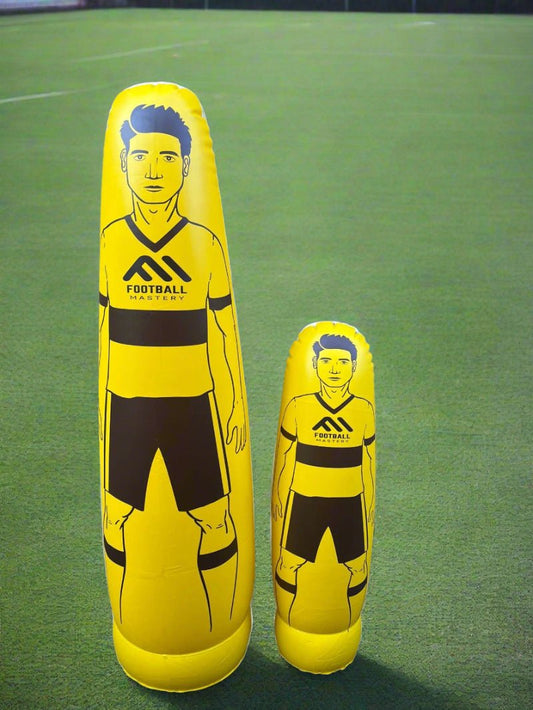
- Air Mannequins x3 – For working around static defenders, simulating match obstacles
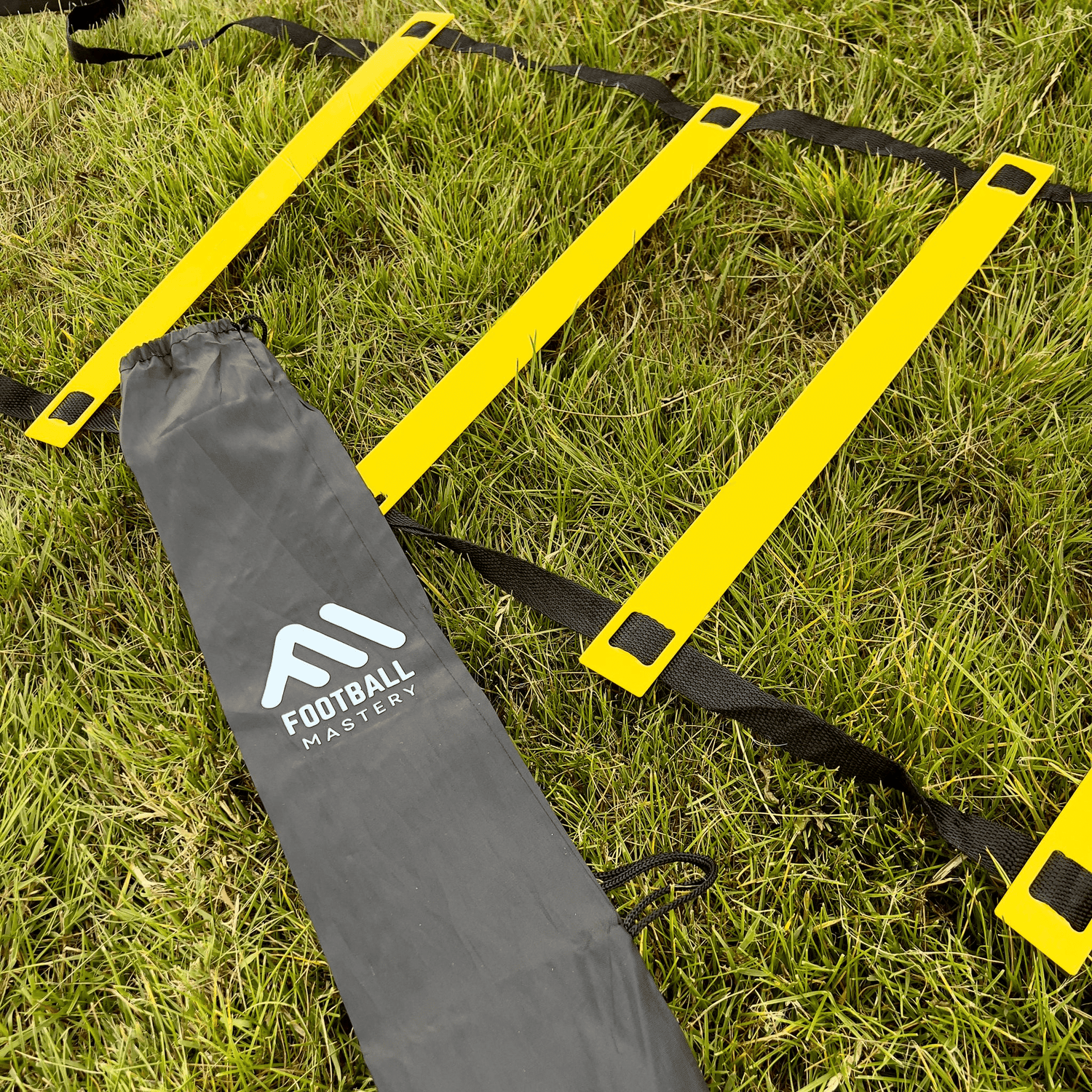
- Flat cones / markers – For positioning and footwork patterns
- Smartphone tripod or notebook – Record your sessions to review technique
You can find multi-product savings in our Football Mastery Bundles, which are ideal for beginners building their first training kit.
“Self‑training isn’t about reinventing the wheel — it’s about making every repetition count.”
Using just these basic tools, you can cover a full range of skill progression drills: ground passing, aerial control, ball mastery, and decision-making patterns — all from your own space.
3. Training Aids that Enhance Football IQ
A rebounder board does more than just sharpen technique — it also trains decision-making under time pressure, which is essential at every level of play.
Integrate these types of exercises into your sessions:
- Reaction drills with varied returns to sharpen reflexes
- Timed pattern exercises to improve composure and flow
- Off-the-ball movement paired with passing to simulate gameplay transitions
It’s this mental sharpness — football IQ — that separates players who train hard from those who train smart.
And remember, training isn't limited to outdoors. Many of our rebound boards are suitable for indoor and outdoor training, allowing you to stay sharp whatever the weather.
Why Rebound Boards Are Essential for Youth Players
Young players are at a critical stage of technical development, and the right tools can accelerate their learning curve dramatically. Rebound boards are particularly well-suited for youth training because they offer predictable, controlled repetition, allowing players to refine core skills without the pressure of a match environment.
Key Benefits for Youth Footballers:
- Confidence-building through consistent, successful touches
- Reflex training that improves coordination and balance
- Independent skill growth through solo practice
- Customisable drills suited for a wide range of abilities and ages
Our equipment is built for durability and long-term use, making it an ideal investment for both parents and coaches supporting the next generation. Visit Football Mastery to explore how our products are designed specifically with young players in mind.
Rebound Boards vs Rebound Nets: What’s the Difference?
While rebound nets have long been used in training, rebound boards offer distinct advantages — particularly when fast skill progression is the goal.
| Feature | Rebound Board | Rebound Net |
|---|---|---|
| Ball Return | Sharp, direct, and consistent | Variable and often looser |
| Bounce Control | Highly predictable | Less consistent due to mesh movement |
| Setup | Easier to position and angle | Larger footprint and setup complexity |
| Skill Focus | Ground passes, first touch, close control | Aerial control, volley training |
Rebound boards like those in our collection are designed to deliver fast, precise returns, which make them perfect for drills that hone technical sharpness and reaction speed — two of the most vital skills for emerging players.
Long-Term Progression: From Beginner to Ball Mastery
One of the standout advantages of a football rebound board is how it supports long-term player development. As players grow in ability, the same board can be used in more complex drills — making it a tool that grows with the player.
Here’s how to structure a performance improvement sequence using just a rebounder and a bit of space:
Weeks 1–2: Technical Foundation
- Two-touch passing (focus on accuracy and control)
- Stationary ball control and return patterns
Weeks 3–4: Reaction and Movement
- One-touch return with off-the-ball movement
- Passing with directional change
Weeks 5–6: Pressure Drills
- Timed passing circuits
- Angle variation with rapid ball recovery
Week 7+: Integrated Game Simulation
- Add Air Mannequins as passive defenders
Combine with shadow play or wall passes around markers
Final Thoughts: Accelerating Your Progress Starts Here
Football rebound boards are more than a tool — they’re a development partner. From the first touch to match-readiness, they give beginners the ability to train with purpose and measure improvement consistently.
Whether you’re a player, parent, or coach, investing in a well-designed, durable, and versatile board like the ones found at Football Mastery will yield returns for years. They're portable, high-performing, and built for the modern footballer.
To get started, explore our full range of rebound boards or check out our value-packed training bundles to take your game to the next level.
Train smart. Train often. And let the rebound board do the work of a thousand passes.
Frequently Asked Questions
1. What age can start using a rebound board for football training?
Most children can begin effective training with a rebound board from around 5–6 years old, as soon as they can reasonably strike and control a ball. Beginners should start with simple, softer passes to build coordination and confidence before progressing to more advanced drills.
2. Can rebound boards be used for sports other than football?
Although designed with football in mind, rebound boards can support drills in other ball sports such as futsal and hand‑eye coordination exercises in rugby or netball. Their predictable rebounds make them versatile tools across various training needs.
3. Will a rebound board damage my garden or indoor flooring?
No — most modern rebound boards, including ours at Football Mastery, are built with rubber or non‑marking feet and freestanding frames. They are suitable for grass, artificial turf, and indoor surfaces without causing damage when used as directed.
4. Is there a difference between a rebound board and a rebound wall?
Yes. A rebound board is typically compact, providing a faster, flatter return ideal for passing and close control. A rebound wall is larger and can simulate more varied angles and match‑like ball returns. Each tool has its place depending on your training goals, but rebound boards are excellent for focused skill work in smaller spaces.
5. Can rebound boards be used effectively in small spaces?
Absolutely. You only need a few metres of clear area to perform effective solo training with a rebound board. By adjusting the angle, you can even reduce return distance for tighter spaces such as garages or driveways.
6. Do rebound boards aid overall fitness as well as skill?
Yes. Incorporating rebound board drills with movement and reaction patterns not only improves ball control and technique but also enhances coordination, balance, and cardiovascular conditioning when combined with dynamic movement.
7. How often should I train with a rebound board to see progress?
Short, regular sessions — for example 10–20 minutes, three to four times a week — are more effective than sporadic, longer sessions. Consistency helps build muscle memory and technical refinement over time.
8. Can rebound boards improve weaker foot ability?
Yes. Because rebound boards provide consistent, repeatable returns, you can focus equally on your weaker foot. High‑repetition drills help improve comfort, confidence, and technical ability on the non‑dominant side.
9. Are rebound boards noisy when used at home?
Most rebound boards produce minimal noise, especially when used on grass or artificial turf. If training indoors on hard surfaces, using controlled passes or a softer ball can help keep noise levels lower.
10. What should I consider when choosing the best rebound board?
Look for adjustable angles, durable and weather‑resistant materials, a stable freestanding design, and portability for easy setup. A quality board not only improves technique but will withstand frequent use indoors or outdoors.