

Rebound Boards vs Wall Training: What Really Works Best
Share
In the world of technical football training, rebound boards and wall drills have become go-to tools for sharpening skills, boosting reaction time, and building game intelligence. This article explores the real differences between these two methods of training and gives you a practical understanding of when to use each. We break down:
- How rebound boards and wall drills develop ball control, passing accuracy, shooting technique, and more.
- Why repetitive rebounding exercises offer a tactical edge for players.
- The science behind ground vs air rebounding, and how it impacts first touch training.
- Key considerations for choosing between a football rebounder, training board, or kickback wall.
- The real-world benefits of solo training, group training, and using smart rebounder systems in modern development programmes.
- Plus, a look at value for money, durability, and adjustability when buying your own equipment.
If you’re stuck deciding between rebound boards and traditional wall work, or wondering how to get the most out of your training setup, you’ll want to read on.
What’s the Difference, Really?
Let’s start with what matters most: development results. Both rebound boards and wall training can supercharge your sessions. But they’re not created equal.
Rebound boards—like this one from Football Mastery—are purpose-built tools designed for consistent, game-like returns. They offer controlled rebounds that help players master first-touch, one-touch passing, and targeted shooting drills with greater precision than traditional walls.
By contrast, wall training leans on whatever space you have: a brick wall, garage door, or schoolyard structure. While this approach can support skill repetition, it often lacks consistency in return speed, angle, and bounce. That said, it still plays a role in simulation training and quick decision-making under pressure.
“When you remove the unpredictability of a wall and replace it with engineered precision, you allow the brain and body to learn faster. That’s where rebound boards shine.”
Skill Development: The Rebounder's Edge
Both training tools support a broad spectrum of football-specific skills, but rebound boards are increasingly preferred in elite academies for a reason.
1. Passing Accuracy & First Touch Mastery
Rebound boards return the ball cleanly and consistently—meaning players can focus on technique, not chaos. For instance, a training board with a dual angle feature allows for both ground rebounding and air rebounding, helping players refine pass-and-move practice and adjust foot placement in real time.
2. Ball Trapping and Receiving
Wall drills can be unpredictable, which mimics real match pressure well. But unpredictability isn't always a good teacher. Rebound boards—particularly angled ones—allow players to control the intensity of the return, perfect for ball trapping drills and eye-foot coordination development.
Block training with rebound boards builds muscle memory through controlled repetition, essential for midfielders looking to dominate possession.
Portability, Set-Up & Modern Coaching Needs
Let’s talk logistics. A key consideration when choosing between rebound boards and wall training is how and where you're training.
- Wall training is limited to location. If you're not near a usable wall, you're out of luck.
- Rebound boards, especially foldable and weatherproof models, offer portability for grassroots players and pro coaches alike.
Football Mastery’s line of rebounders has been designed with high-quality materials and quick setup in mind. Whether you're using them at home, in the park, or during academy sessions, rebounders allow for dynamic rebounding in any setting.
This makes them ideal for:
- Solo training in tight spaces
- Group drills with multiple players
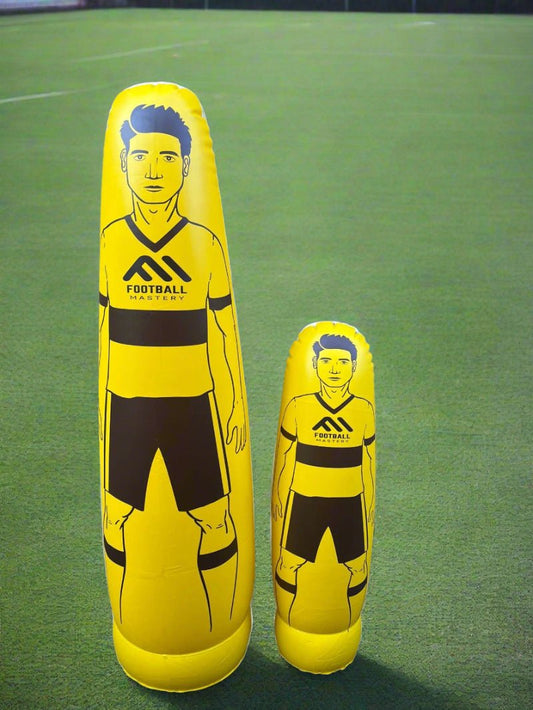
- Enhancing agility drills by combining with other tools like Air Mannequins
Cognitive Training & Game Intelligence
Modern football isn’t just about physical sharpness—it’s also mental. Players are now judged on their quickness of thought, scanning ability, and decision-making under pressure.
With the rise of interactive feedback (light and sound) and app integration in advanced rebounder systems, players can now train their brain as much as their feet. While walls can help simulate pressure, they don’t teach players to react intelligently to stimuli the way smart boards or interactive rebounders do.
Though Football Mastery’s current focus is on non-electronic boards, many of the same cognitive benefits can be achieved with structured drills and drill variety embedded into sessions.
Choosing the Right Size, Angle & Bounce Type
Not all rebounders are created equal—and the best setup for you depends on who's training, what skills are the focus, and how often the equipment is used.
1. Size Options: Adult vs Youth
When selecting a football rebounder or wall-based tool, size matters. For younger players, a more compact rebound board offers manageable return speeds and angles that match their physical capacity. For older youth and adults, a larger soccer rebounder board with a sturdy frame supports high-intensity shooting drills and power passes without toppling or flexing.
A general guideline:
- Youth players (U8–U12) → Smaller, lighter boards
- Teenagers and adults → Full-size, heavy-duty rebounders
2. Angle Adjustability & Dual-Function Design
Want to train both aerial control and ground passing? Look for rebounders that offer an adjustable angle or dual angle design. This unlocks versatility, enabling:
- Ground rebounding for passing and first-touch work
- Air rebounding to develop aerial ball control, trapping, and finishing
Angle variability allows players to simulate different in-game scenarios—like receiving a driven pass, lobbing a clearance, or reacting to a flicked header. This kind of tactical awareness can’t be replicated by static walls.
Real Match Benefits: What Transfers to the Pitch?
The debate isn’t just about equipment—it’s about what translates into better performance on match day. Here’s how rebound boards and wall training stack up:
Rebound Boards:
- ✅ Offer consistent, game-like returns
- ✅ Allow fine-tuning of footwork and touch
- ✅ Encourage repetition and muscle memory
- ✅ Are excellent for target practice, reaction training, and controlled rebounds
Wall Training:
- ⚠️ Less predictable but useful for chaotic match-scenario simulation
- ⚠️ Limited to flat ground and ball bounce angles
- ⚠️ Difficult to control return speed and trajectory
If your focus is building technical excellence—especially in the tight spaces of midfield or under pressure from pressing opponents—rebound boards give you the precision to master your touch and passing speed.
Building an At-Home Training Station
One of the biggest advantages of owning your own rebounder is the ability to train whenever you like, wherever you are. With the right setup, your backyard or driveway becomes a personal academy.
Essentials to Include:
- A quality football rebounder with adjustable angles
- Air mannequins to simulate defenders
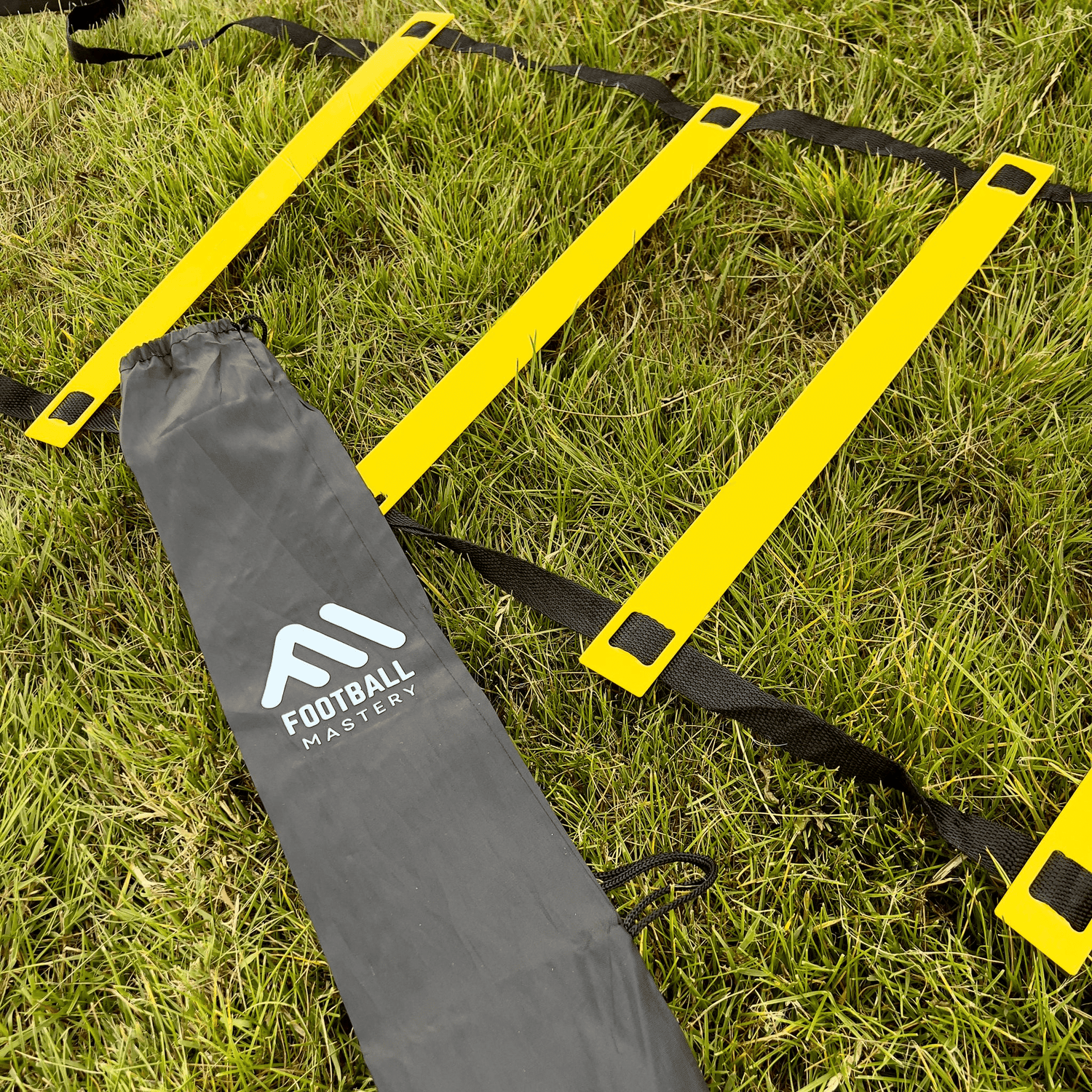
- Cones, mini-goals, and agility ladders for movement and direction change drills
- Training targets to sharpen finishing and passing precision
Better still, you can grab them all as part of bundled options in Football Mastery’s Bundles—designed to give players and coaches a cohesive system at better value.
"Control the environment, and you control the development. That’s the true value of investing in quality training equipment.”
Drill Ideas for Solo & Group Use
Whether you're working alone or with teammates, the flexibility of rebounders supports a range of drills tailored to different skill sets.
Solo Training:
- One-touch passing circuits
- First-touch challenge drills: vary power and angle for unpredictability
- Passing accuracy targets using cones or markers
- Shooting technique with bounce returns
Group Training:
- Pass-and-move sequences around mannequins
- 1v1 drills using a rebounder as neutral return player
- Scanning and call-out drills for game vision development
- Pressure touch: short passes with quick close-down pressure after rebound
Using rebounders to train in small groups builds decision-making and quickness of thought—crucial in tight games or under intense pressing.
Choosing the Right Rebounder: What to Look For
Not all rebounders deliver equal value, and choosing the right one can make the difference between a passing gimmick and a performance-enhancing tool.
Here’s what to assess before buying:
1. Bounce Back Level & Return Speed
The spring mechanism or board material determines how fast and how cleanly the ball comes back. A quality football rebounder will provide consistent ball return for both short and long passes without dead spots or erratic spin.
Consider a board with dual-surface options or engineered angles that allow for both fast-paced returns and controlled rebounds. These features are essential for first touch training and reaction time drills.
2. Durability & Comfort of Use
You want a rebound board that lasts—not one that wobbles, cracks, or slips every time it’s hit. Look for:
- Heavy-duty rebounders made from high-quality materials
- Rubber feet or weighted bases for comfort level and stability
- Weatherproof coatings to ensure you can train outdoors, year-round
At Football Mastery, our rebound boards are tested by coaches and players across the UK to ensure every product meets these real-world durability needs.
Setup, Storage & Portability
One of the overlooked aspects of choosing between wall training and rebound boards is how easy the equipment is to move, store, and set up. Traditional walls, of course, offer no flexibility. You’re stuck with what’s available—often not near your home or accessible during off hours.
Rebounders, on the other hand, can be:
- Foldable for storage in tight spaces
- Lightweight yet sturdy for travel to the pitch
- Easy to set up in under two minutes
This kind of convenience means more training, more often. Consistent, accessible practice equals faster development.
Value for Money: Long-Term Return on Investment
While rebound boards often carry a higher upfront cost than relying on a wall, it’s essential to frame that cost as an investment.
For players training 2–4 times per week, a rebounder isn’t just a tool—it’s a development multiplier.
Let’s break that down:
| Factor | Rebound Board | Wall Training |
|---|---|---|
| Portability | ✅ Yes | ❌ No |
| Consistency | ✅ Game-like | ⚠️ Varies |
| Drill Variety | ✅ High | ⚠️ Limited |
| Skill Transfer | ✅ Strong | ⚠️ Moderate |
| Setup Flexibility | ✅ Train anywhere | ❌ Fixed location |
| Cost | 💷 Initial investment | 🆓 Free, but limited |
Ultimately, a tool that offers better feedback, improved mechanics, and more training reps will provide greater value for money over time.
If you’re ready to take the next step, visit the Football Mastery homepage to view our latest training gear.
Final Verdict: Rebound Boards vs Wall Training — What Works Best?
It’s not about declaring one method “better” than the other. It’s about purposeful use.
Use wall training when:
- You're working with limited equipment
- You want to simulate chaotic bounce patterns
- You’re focusing on reaction drills without precision
Use a rebound board when:
- You want precise, consistent returns for technical growth
- You’re practising targeted drills (passing, first touch, finishing)
- You’re building a flexible at-home or on-pitch training station
For serious players and coaches looking to develop faster, train smarter, and improve game intelligence, a rebound board is more than just gear—it’s a competitive edge.
What Coaches & Players Are Saying
Across academies, Sunday league, and elite training environments, rebounders are becoming staples for individual growth.
"Since using Football Mastery's rebound board, my players have seen noticeable improvements in their first touch and passing under pressure. It’s become a must-have in our sessions."
— Head Coach, U14 Academy Team
“I train 4–5 times a week solo, and having a rebound board means I never waste a session. It’s like having a teammate that never gets tired.”
— Amateur Player, London
If you’re ready to take your training to the next level, explore our latest rebound boards and training bundles. Whether you're working on shooting drills, ball trapping, or scanning ability, the right gear can elevate your game faster than ever.
In Summary:
- Rebound boards provide precision, consistency, and portability
- Wall training is useful for chaotic realism but lacks structure
- Consider your training goals, space, and budget when choosing
- For skill repetition, game vision, and cognitive training, rebounders deliver better results
- Check out Football Mastery's products to find the setup that fits your football journey
FAQs: Rebound Boards vs Wall Training
1. Can rebound boards be used on any surface?
Yes, most quality rebound boards are designed for use on a variety of surfaces, including grass, turf, concrete, and even indoor gym floors. However, for optimal stability and bounce performance, it’s best to place them on flat, non-slippery surfaces. Look for rubber feet or weighted bases for grip.
2. Are rebound boards noisy when used at home?
Rebound boards do generate some noise upon impact, but significantly less than kicking against a brick wall or garage door. Boards with composite or rubberised surfaces tend to absorb more sound, making them a better option for residential use.
3. What types of football drills are best suited for rebound boards?
Rebound boards excel in:
- First-touch drills
- One-touch passing
- Target practice
- Turning under pressure
-
Footwork combinations
Their consistent rebound makes them perfect for technical isolation work or warm-ups before matches.
4. Is a rebound board better for goalkeepers or outfield players?
While rebound boards are most commonly used by outfield players, they can also benefit goalkeepers by simulating quick returns, unexpected rebounds, and low/high save practice. For GK-specific drills, combining a rebounder with mannequins or cones can simulate shot-stopping scenarios.
5. Can a rebound board help with weak foot development?
Absolutely. Because the ball returns consistently, players can get high repetition using their weaker foot. This allows for more controlled, focused training without relying on a partner—ideal for building confidence in bilateral play.
6. How does weather affect rebound boards compared to wall training?
Rebound boards designed with weatherproof materials (like those in Football Mastery's range) are resistant to rain, sun, and dirt. Walls, depending on the surface, can get slippery or damage the ball when wet. Boards offer a more controlled, safe surface year-round.
7. Can rebound boards be used indoors?
Yes, many rebound boards are suitable for indoor use. You’ll need enough space to pass and move around them, and ideally use a futsal ball or slightly deflated football to reduce bounce and surface impact. Check that the board has protective feet to avoid marking floors.
8. Do rebound boards require assembly or tools?
Most modern rebounders are pre-assembled or tool-free for setup. They may need a quick leg adjustment or fold-out frame, but it’s typically straightforward and takes just a few minutes. Always follow the manufacturer’s guidelines for first use and safety.
9. How do I store a rebound board when not in use?
Look for boards that are foldable or include a flat-pack design. Many will slide under a bed, lean against a garage wall, or fit into a cupboard. Portability and storage are major advantages over relying on fixed wall locations.
10. Can rebound boards be used for other sports or just football?
While designed for football, rebound boards can sometimes be adapted for sports like futsal, rugby, netball, or cricket—especially for passing, reaction drills, or coordination work. However, the angles and surfaces are optimised for football dynamics, so they’re best used for that purpose.