

Why Every Coach Should Use Football Rebound Boards
Share
Training smarter—not just harder—is no longer optional in modern football. Coaches today are expected to deliver sessions that develop technical precision, tactical awareness, and mental sharpness—all while keeping players engaged. This is where football rebound boards come into their own. These deceptively simple tools offer dynamic training possibilities for every position, ability level, and age group. Whether you're refining passing accuracy or improving your goalkeeper’s reflexes, rebound boards offer a consistent and versatile way to sharpen performance.
This article explores:
- The key benefits of using football rebounders in coaching
- How rebound boards compare with rebound nets and walls
- Why they’re essential for technical skill development
- Types of rebound boards and the drills they support
- Why they’re ideal for both solo training and team sessions
- Insights on incorporating them into your sessions effectively
Raising the Bar in Technical Training
If your coaching philosophy includes the phrase “technical proficiency training”, then rebound training should be front and centre in your equipment list. Football rebounders (also called rebound boards) replicate real-game scenarios by returning the ball at speed, demanding control, composure, and quick thinking from players.
For example, our Football Mastery Rebound Board delivers a solid, predictable rebound, perfect for one-touch passing drills, first-touch control, and tempo-based movement patterns. It's not about gimmicks—it's about guaranteed repetition with game-like returns.
“The best training aids make players think and adapt — rebound boards do both with every touch.”
From Grassroots to Pro: One Tool, Multiple Benefits
Football rebound boards have evolved beyond their basic form. What was once a flat slab is now a purpose-built dynamic training tool engineered to improve reaction time, agility, and ball mastery. They offer versatility of use across:
- Solo training sessions, where individual players can get maximum touches
- Team drills, with stations set up for positional or unit work
- Goalkeeper training, where unpredictable returns demand lightning-fast reflexes
- Pre-match warmups, to sharpen technique in a confined space
You’ll often find rebound boards bundled as part of elite coaching gear. Our specially curated Football Mastery Bundles include rebounders alongside cones, mannequins, and more—everything needed for building technical excellence.
The Edge in Skill Development
Modern football is increasingly about split-second decisions made under pressure. Skill development is no longer just about how many stepovers a player can perform—it's about ball control, touch quality, and decision-making under stress. Rebound boards provide a controlled environment to train:
- Passing accuracy
- First-touch control drills
- Shooting and volley technique
- Bounce-back passing under pressure
- Quick transition movements simulating real match tempo
These drills support neuro-muscular coordination and develop a player’s feedback loop—the ability to process and adjust touch based on instant ball return. It’s this kind of training that bridges the gap between training pitch and match day.
Rebound Boards vs Rebound Nets: Which Is Better?
This debate often comes down to purpose. Rebound nets, with their elastic return, can create varied ball trajectories that are ideal for agility drills and randomised returns. In contrast, rebound boards offer more predictable, game-like simulation, perfect for drills focusing on technique improvement and consistency.
If your goal is to build a repeatable, controlled skill set, then boards win. Their solid surface ensures consistent feedback—perfect for refining ball contact and decision-making.
For more equipment like rebound boards, take a look at our complete collection here.
Designing Smarter Sessions with Rebound Boards
Football coaches are no longer just facilitators—they're session architects. A well-designed session not only builds technique but also instils match-ready intelligence. Rebound boards support training periodisation by offering varied intensity drills without compromising technical quality.
Whether you're coaching U10s or a senior semi-pro side, rebounders slot seamlessly into:
- Warm-up sequences: Quick passing, control drills, reaction movements
- Main session circuits: Integrate them into rotational drills or possession games
- Recovery sessions: Light individual work focusing on ball mastery
- Small group technical drills: Create dual-purpose training stations with passing and receiving tasks
Adding angle variation drills increases the tactical realism. Adjusting the tilt of the rebound board challenges players to read the angle and respond dynamically, just like they would in a crowded midfield.
Rebound Boards and Mannequins: A Match Made for Movement Patterns
One of the most underrated pairings in football training is the combination of rebound boards and mannequins. Together, they allow you to mimic defenders, play around pressure, and simulate game-like passing angles. It’s ideal for creative play drills.
For instance, players can:
- Receive from the rebound board
- Navigate around a mannequin (acting as a passive defender)
- Deliver a through-ball or shot on goal
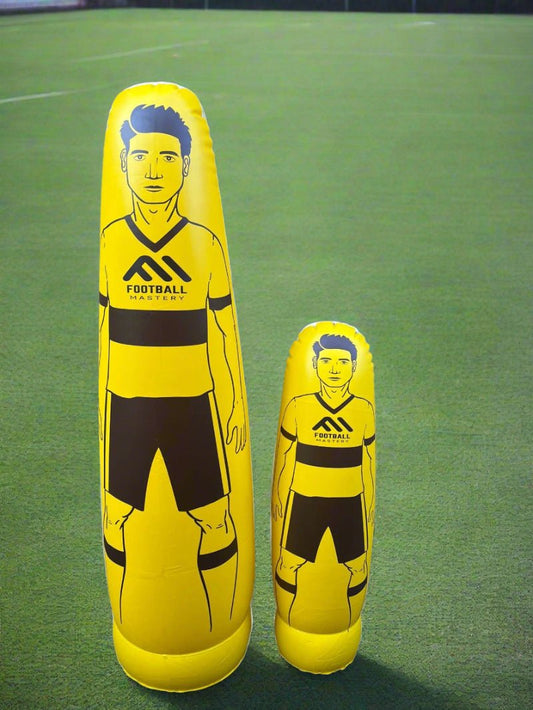
Our Air Mannequins Set is especially useful here—portable, inflatable, and safe for contact in tight training environments.
These kinds of match-like simulations elevate spatial awareness, encourage motor skill acquisition, and force players to problem-solve on the move.
Solo Training: Unlocking Maximum Touches Without a Partner
In a perfect world, players would have access to coaches and teammates daily. But real-world limitations—time, space, availability—often get in the way. That’s why rebound boards are the ultimate portable training aid.
For players training alone, a rebounder can transform a garden or driveway into a high-quality technical zone. Whether it's first-touch control, shooting drills, or simply getting reps on passing technique, rebound boards make skill retention not just possible, but effective.
We designed our boards with this in mind—compact, weather-resistant, and built for repetitive impact.
And for those just getting started, you can find ideas and tips over on our Football Mastery blog, where we break down how to maximise every minute of your solo sessions.
Why Repetition Builds Champions
Every elite player you've ever admired—whether it's De Bruyne’s weighted passes or Bellingham’s composure under pressure—has one thing in common: repetition. Not repetition for the sake of it, but deliberate, purposeful, feedback-driven repetition.
Rebound boards offer this. Every touch is a chance to recalibrate: too soft, too firm, wrong angle—players learn fast when the feedback is instant.
That’s why coaches at all levels are integrating rebound boards into regular session plans. They’re a direct route to:
- Consistency and repetition
- Tactical reinforcement through simulated game passes
- Immediate feedback loops
- Sharper reflexes and decision speed
Football training equipment should do more than fill space on a pitch—it should drive improvement. Explore our full product lineup to see how we’ve built that philosophy into everything we offer.
Rebound Training for Goalkeepers: Reactions Refined
While much of the focus around football rebound boards centres on outfield play, goalkeepers may benefit even more from this tool. Rebound training allows keepers to fine-tune their reaction time, reflexes, and agility with consistent, pressure-like stimuli. It’s not just about shot-stopping—it's about anticipation, movement, and command.
Here are a few effective goalkeeper drills using a rebound board:
- Close-range block saves: Have a coach strike the ball at the board, forcing instant dives and reactions
- Deflection training: Vary the angle of the board to create unpredictable ball paths
- Rebound-to-punch scenarios: Great for simulating parried shots and second-chance saves
- Footwork into diving drills: Combine lateral movement with catching and ground saves
For clubs without a full-time goalkeeping coach, rebound boards offer a reliable method to train keepers independently—yet effectively.
Developing Players for the Long Game
Modern coaching goes beyond the next match—it’s about building a player development pathway that nurtures technical mastery, decision-making, and adaptability over time. Rebound boards contribute directly to this model by helping players:
- Build tempo and touch from a young age
- Improve their technical consistency across sessions
- Adapt to various game contexts through varied ball returns
- Maintain sharpness during off-seasons or recovery weeks
- Train specific roles—full-backs, midfielders, goalkeepers—all can benefit
Over months and years, this builds not just better players but more intelligent ones. The simplicity of a rebound board belies its long-term value in shaping behaviours that translate directly into matches.
Need equipment that supports development at every level? Our Football Mastery range is designed exactly for that purpose.
Why Football Coaches Are Choosing Boards Over Walls
The traditional approach of using a wall for training may seem logical—it's available, stable, and reflects the ball. But rebound boards vs wall training is not even close when you consider portability, angle adjustment, and safety.
With rebound boards:
- Portability is unmatched – take it anywhere, anytime
- Consistency of bounce is guaranteed—no surface irregularities
- Angle control means coaches can tailor sessions for different returns
- Noise reduction makes them suitable for residential training or schools
In contrast, walls are immovable, inconsistent, and often unpredictable—especially for young players working on delicate touch or control. That’s why boards are increasingly replacing walls in club academies, schools, and grassroots settings alike.
Final Thoughts: A Small Tool with a Big Impact
In the ever-evolving world of football coaching, it’s easy to be drawn to the flashy, high-tech tools. But sometimes, the most effective solutions are the most straightforward. Rebound boards offer:
- A direct line to technical improvement
- A versatile training experience for all roles and ages
- A path for individual skill development even without teammates
- A durable, value-driven addition to your football training equipment setup
If you haven’t yet integrated a rebound board into your sessions, you’re missing out on one of the most dynamic training tools available. Affordable, space-efficient, and rich in coaching potential—they’re a must-have.
Ready to bring one into your programme? Explore our premium Rebound Board collection and elevate every session.
Frequently Asked Questions
1. Do rebound boards offer value for solo players as well as team training?
Yes. Football rebound boards are excellent for solo training because they act like a practice partner, returning the ball for repetitive passing, receiving, and control drills when no teammate is available. This makes them ideal for independent skill work.
2. How does rebound board training impact reaction time and agility?
Rebound training forces players to quickly respond to unpredictable ball returns, which enhances reaction time, reflexes, and agility—skills essential in live match situations. Regular use can sharpen a player’s instinctive movement patterns.
3. Are rebound boards suitable for players of all ages and skill levels?
Absolutely. From grassroots youth players developing basic ball control to advanced players refining technique under pressure, rebound boards can be adjusted (e.g., through angles and drill intensity) to match differing ability and age groups.
4. Can rebound boards replace traditional partner passing in training?
Not completely, but they are a powerful supplement. While live passing with a partner adds tactical context and human variability, rebound boards allow for high-volume, consistent practice that builds technique and repetition efficiently.
5. How do I choose the right rebound board for my needs?
Consider how you’ll use it:
- Fixed boards are simple and durable, ideal for fundamental passing drills.
- Adjustable boards let you vary the rebound angle for different drill types.
- Heavy‑duty models suit regular club use, while lighter, portable boards are better for individual practice.
6. Do rebound boards work on all types of playing surfaces?
Yes, most quality rebound boards can be used on grass, turf, or even hard training surfaces, provided they are stable and secure during use. Adjustable feet or anchoring options can improve stability on uneven ground.
7. How often should players use rebound board drills to see improvement?
Frequency depends on your training goals, but incorporating rebound drills 2–3 times per week in technical sessions can yield noticeable gains in passing accuracy, first touch, and ball control over time.
8. Can rebound boards help with fitness and conditioning?
While primarily a technical tool, rebound sessions can be physically demanding—especially when adding movement, agility runs, or continuous ball retrieval—which indirectly supports stamina, coordination, and fitness.
9. What skills are most improved by using rebounders?
Football rebound training boosts a range of abilities, including ball control, first-touch reception, passing precision, quick decision-making, and handling under pressure—making it a versatile addition to skill development routines.
10. How do rebound boards compare with rebound nets or walls?
Rebound boards offer a consistent and reliable surface with predictable returns suited for precision drills, while nets can produce more varied trajectories and walls may be less controlled. Choosing between them depends on your training focus—from tightly controlled technique work to reactive juggling and varied rebound paths.