

Why Football Rebound Boards Outperform Partner Drills
Share
Summary: Everything You Need to Know, Fast
Football rebound boards are revolutionising individual football training by enabling players to sharpen technical skills, boost reaction time, and improve consistency — all without relying on a partner. In this article, you’ll discover:
- Why rebound boards offer unmatched versatility for solo training
- How they create unpredictable, match-like conditions that accelerate technique development
- The benefits of using a football rebounder over partner drills for passing, ball control, first touch, and shooting
- The role of rebound boards in goalkeeper training, fitness, and agility work
- How rebounders enhance training efficiency, mental focus, and self-paced skill building
- Why rebound boards are the most consistent, portable, and scalable training tools on the market
By the end of the article, you’ll understand why rebound boards are more than just a substitute for a teammate — they’re an upgrade.
The New Era of Solo Training: Why Go It Alone?
Training alone used to feel like second-best. But that’s changed — dramatically.
With the emergence of high-performance tools like the Football Mastery Rebound Board, players at all levels are finding that self-paced practice can be just as effective — if not more — than partner drills. Why? Because rebound boards offer what no human can:
- Consistent repetition for building muscle memory
- Immediate, error correction feedback on every touch
- The freedom to train any time, with zero reliance on another player
This shift isn’t just about convenience. It’s about control. Whether you're focused on ball control, passing accuracy, or refining your first touch, rebound boards provide a controlled environment where distractions vanish and learning accelerates.
“Footballers don’t need to wait for a teammate to show up — they can work smarter, sharper, and more often with a rebounder.”
Unpredictable by Design: Training Like It's Match Day
One of the biggest weaknesses of partner drills? Predictability. When you pass with a teammate, there’s a rhythm — a human rhythm — that can become repetitive. The problem is, matches aren’t predictable.
High-quality rebound boards break this pattern by delivering unpredictable rebounds and dynamic feedback, simulating real-game chaos. They force you to:
- React quickly
- Think creatively
- Adapt your technique under pressure
This kind of variability trains your brain and body in sync — building better reflexes, agility, and mental focus. You’re not just repeating movements; you’re preparing for the fluid reality of a live match.
And because many rebound boards (like those in the Football Mastery Bundles) come with adjustable angles, players can control the difficulty and scale their training intensity over time.
Isolating Technique: When Simplicity Wins
Partner drills can often become unfocused — a mix of jogging, chatting, waiting for your turn. Rebound boards cut through that noise by letting you isolate specific areas:
- First-touch development
- Sharp passing in tight spaces
- Volleys and close-range shooting
- Footwork and agility under time pressure
Every touch matters. Every mistake is your own. And every repetition brings improvement. That kind of skill isolation is what makes rebound boards such powerful tools for individual skill development.
And unlike most walls or makeshift rebound surfaces, premium rebound boards are engineered with precision angles and materials, ensuring that every ball returns with match realism — not just a lazy bounce.
If you’re working on volleys, for example, it’s not about hitting a target — it’s about setting yourself up with a quality rebound, then controlling the shot. And with boards that work on any surface, whether it’s turf, grass, or pavement, you’re never limited by location.
“Skill doesn’t come from hitting the same pass 100 times — it comes from adjusting to 100 slightly different returns.”
Next-Level Goalkeeper Training: Sharpening Reflexes Without a Shooter
When it comes to training goalkeepers, partner drills often fall short. They rely on a partner delivering consistent service — something that’s hard to control and easy to waste time on. Enter the rebound board.
With a well-angled rebounder, goalkeepers can:
- Practise reaction saves from close-range returns
- Work on handling unpredictable rebounds
- Improve footwork by incorporating lateral movement
- Simulate one-touch distribution and recovery scenarios
Unlike a teammate who gets tired or loses focus, a rebound board delivers consistency — and demands it in return. Whether it's low, driven balls or awkward bounces, rebounders force keepers to think fast and move faster. It's this kind of reflex and timing training that gives rebound boards the upper hand.
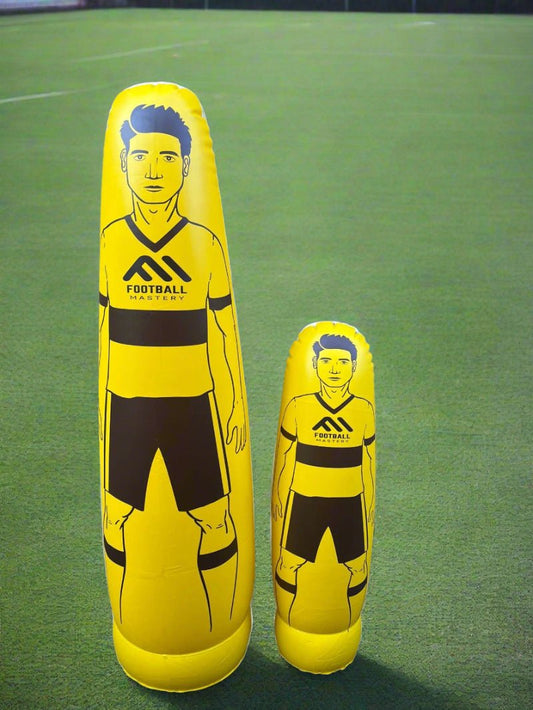
For setups that include Air Mannequins, you can even create full training scenarios with obstacles and visual interference — exactly like a crowded penalty box.
Stamina, Rhythm and Mental Focus
With no time wasted setting up the next drill or rotating between players, rebound board sessions become high intensity, low downtime workouts. This not only builds fitness and stamina, it also sharpens your mental concentration.
A typical solo rebounder session might include:
- One-touch passing on the move
- Reaction volleys alternating between feet
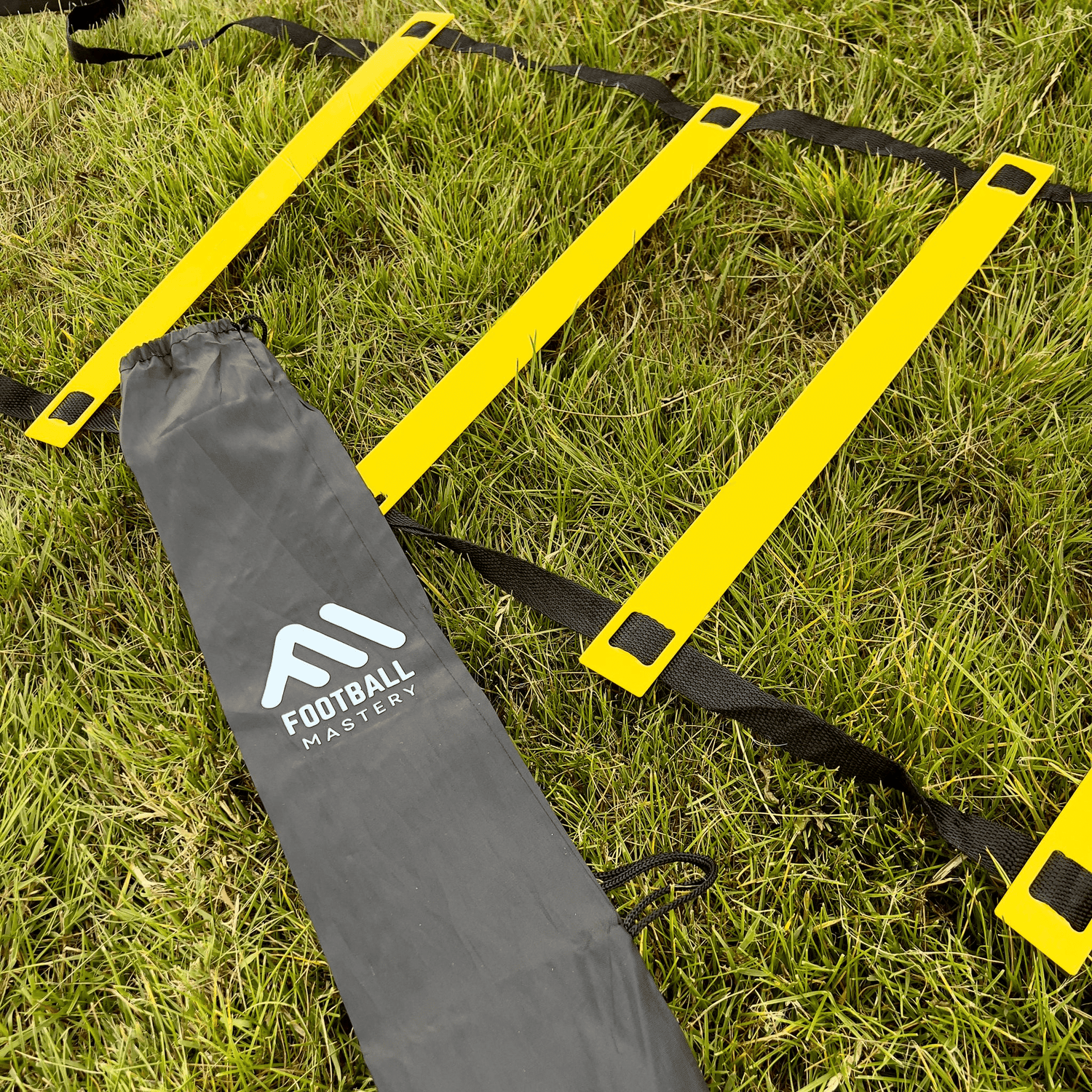
- Agility ladder into first-touch control
- Timed circuits focusing on touch under fatigue
Every movement counts. Every drill flows into the next. Over time, players build:
- Rhythm that mirrors match tempo
- Endurance through sustained activity
- Timing and decision-making under fatigue
This combination of physical and mental load isn’t easily matched in casual partner drills — especially when one partner may not be operating at the same level of intensity or focus.
The Portability Factor: Train Anywhere, Train More
Another major edge rebound boards have over partner drills is accessibility.
When you rely on a training partner, you're limited by their availability. When you rely on a fixed location (like a wall or goal), you're limited by the space. Rebound boards remove both barriers.
Our rebound boards are:
- Lightweight and compact
- Built for multi-surface use
- Easy to set up in backyards, parks, or even indoors
That kind of flexibility means more reps, more often. Whether you're warming up before a match or squeezing in 15 minutes after school, you're always in control of your session. That’s what makes rebound boards essential for independence, especially for youth players developing discipline and ownership over their training.
If you’re just starting out or looking to maximise value, Football Mastery Bundles offer a curated mix of tools designed for comprehensive solo or group sessions — from boards to cones, ladders and more.
“Rebound boards don’t just fit into your training — they fit into your lifestyle.”
Rebound Boards vs Walls: Not All Bounces Are Equal
We’ve all used a brick wall or garage door to pass against — and for years, that was good enough. But comparing a rebound board to a wall is like comparing astro boots to running shoes. One was made for football; the other just happens to work.
Here's why rebound boards outperform:
- They’re built with angled legs, delivering lift and unpredictability in returns
- They’re gentle on the ball, unlike hard walls which can damage footballs over time
- They simulate game-like bounces, rather than static rebounds
- They offer training scalability, allowing players to adjust angles and difficulty
While a wall can build some basics, a rebounder develops decision-making, improvisation, and real-time technique correction — skills that translate directly onto the pitch.
Unlocking Creativity and Match Intelligence
While partner drills can simulate teamwork, they often follow a predictable rhythm — a comfortable back-and-forth exchange that rarely mirrors the intensity or spontaneity of a real game.
Rebound boards change the picture. The angle, power, and surface type all affect the return — creating unpredictable scenarios that challenge players to think fast and adapt. This is where true creative play is born.
Footballers using rebounders are encouraged to:
- Use a variety of first touches: flicks, feints, or turns
- Combine tight dribbling with reactive passing
- Transition quickly from defence to attack, just like in match play
The emphasis shifts from simply “getting the ball back” to making the right next decision. That’s match intelligence, and it’s what separates a decent player from a game-changer.
When combined with other modular tools like those found on FootballMastery.co.uk, such as cones, agility ladders, and mannequins, players can design sessions that truly mirror in-game situations — solo.
“It’s not about copying a match — it’s about preparing your mind and body to improvise when it matters most.”
Repetition Without Repetition: Building Technical Confidence
Rebound boards help build technique through repetition — but not the kind that leads to boredom or bad habits. Every return is slightly different, keeping players engaged and mentally switched on.
This level of technical refinement is what separates rebound boards from human partners, who may lack consistency in delivery or focus. And as players see measurable improvement in their ball control, passing accuracy, and first touch, they gain something more powerful than a sharper skillset — they gain confidence.
That confidence is what drives performance on match day. Because when you've spent hundreds of hours adapting to the rebounder's unpredictable responses, real game scenarios feel slower, simpler, and easier to manage.
So... Are Partner Drills Obsolete?
Let’s be clear — partner drills still have a role in team development. Communication, timing with teammates, and game-flow understanding are all built through interaction. But when it comes to pure skill development, training efficiency, and technical repetition, rebound boards come out ahead.
Here’s why they outperform partner drills in key areas:
| Training Element | Rebound Board | Partner Drill |
|---|---|---|
| Consistency | High – same return every rep | Variable – depends on partner accuracy |
| Independence | Full control over time and session | Dependent on others |
| Error Correction | Immediate and personal | Delayed or overlooked |
| Match Simulation | High variability, unpredictable | Limited unless highly skilled partner |
| Repetition Rate | Rapid, uninterrupted | Slower due to rotation, misplays |
| Scalability | Adjustable angles and distances | Limited by partner ability |
| Training Locations | Multi-surface, anywhere | Requires space and partner |
It’s not a question of replacing all human interaction — it’s about maximising the limited time most players have to train, especially outside of scheduled team sessions. And that’s where rebounders become indispensable.
The Final Touch
Footballers who train with purpose, intensity, and creativity go further — and rebound boards make that type of training accessible, flexible, and effective. From the backyard to the training ground, they deliver a return on investment that partner drills can’t match in isolation.
If you’re ready to take your training up a level, start with the tool that offers the most versatility and the most control. Explore the Football Mastery Rebound Board, or browse the full range of football rebound boards to find the right fit for your game.
You don’t need a partner to train like a pro.
You just need the right rebound.
Frequently Asked Questions (FAQ)
Why Football Rebound Boards Outperform Partner Drills
1. Can beginners benefit from using a football rebound board?
Absolutely. Rebound boards are excellent for players of all levels — especially beginners — because they provide a safe, controlled way to build fundamental skills such as ball control, passing, and first touch without pressure or judgment from others.
2. Do rebound boards replace the need for team training entirely?
No. While rebound boards are superior for individual skill development, they complement team sessions rather than replace them. Partner drills and group play are still essential for building communication, positioning, and tactical awareness.
3. Are rebound boards suitable for children and youth players?
Yes. Youth players benefit greatly from rebounders because they promote independent learning, improve confidence, and allow safe repetition of core techniques. Many boards are lightweight and can be adjusted for young players.
4. What skills can I realistically develop with a rebound board?
You can improve a wide range of skills, including:
- Close ball control
- One-touch passing
- First-touch receiving
- Reaction time and reflexes
- Shooting technique and volleys
- Agility and movement
- Distribution and decision-making for goalkeepers
5. How do rebound boards help prevent bad training habits?
Rebound boards deliver immediate feedback, exposing poor technique with every inaccurate touch. This encourages players to self-correct quickly, which leads to more effective and conscious learning compared to partner drills where errors may go unnoticed.
6. Can rebound boards be used indoors?
Yes — many models are suitable for indoor use, provided there's enough space and a safe surface. Always check the product specs and test bounce intensity beforehand. Some boards are specifically designed for indoor/turf conditions.
7. Do rebound boards help with injury recovery or rehabilitation?
Yes. Since you can control intensity, rebound boards are excellent for low-impact, progressive training during recovery. They allow players to regain rhythm, timing, and technical sharpness without overexerting themselves.
8. How long should I train with a rebound board per session?
Sessions can range from 15 minutes to over an hour, depending on your goals. The key is quality over quantity — focused, consistent drills will yield better results than long, unfocused sessions.
9. Is there a difference between rebound boards and rebound nets?
Yes. Rebound boards are solid surfaces (often composite or metal) that return the ball with power and control, ideal for ground passes, volleys, and first-touch drills. Rebound nets are more elastic and unpredictable, often used for goalkeeper or aerial training.
10. What features should I look for in a high-quality rebound board?
Look for:
- Adjustable angles for varied rebound difficulty
- Durable build quality for long-term use
- Portability for flexible training
- Stable design that won’t move on impact
- Compatibility with different surfaces (grass, turf, hard ground)
Explore our trusted range of football rebound boards designed for all training environments.